Numa Rousseve, Class of 1936
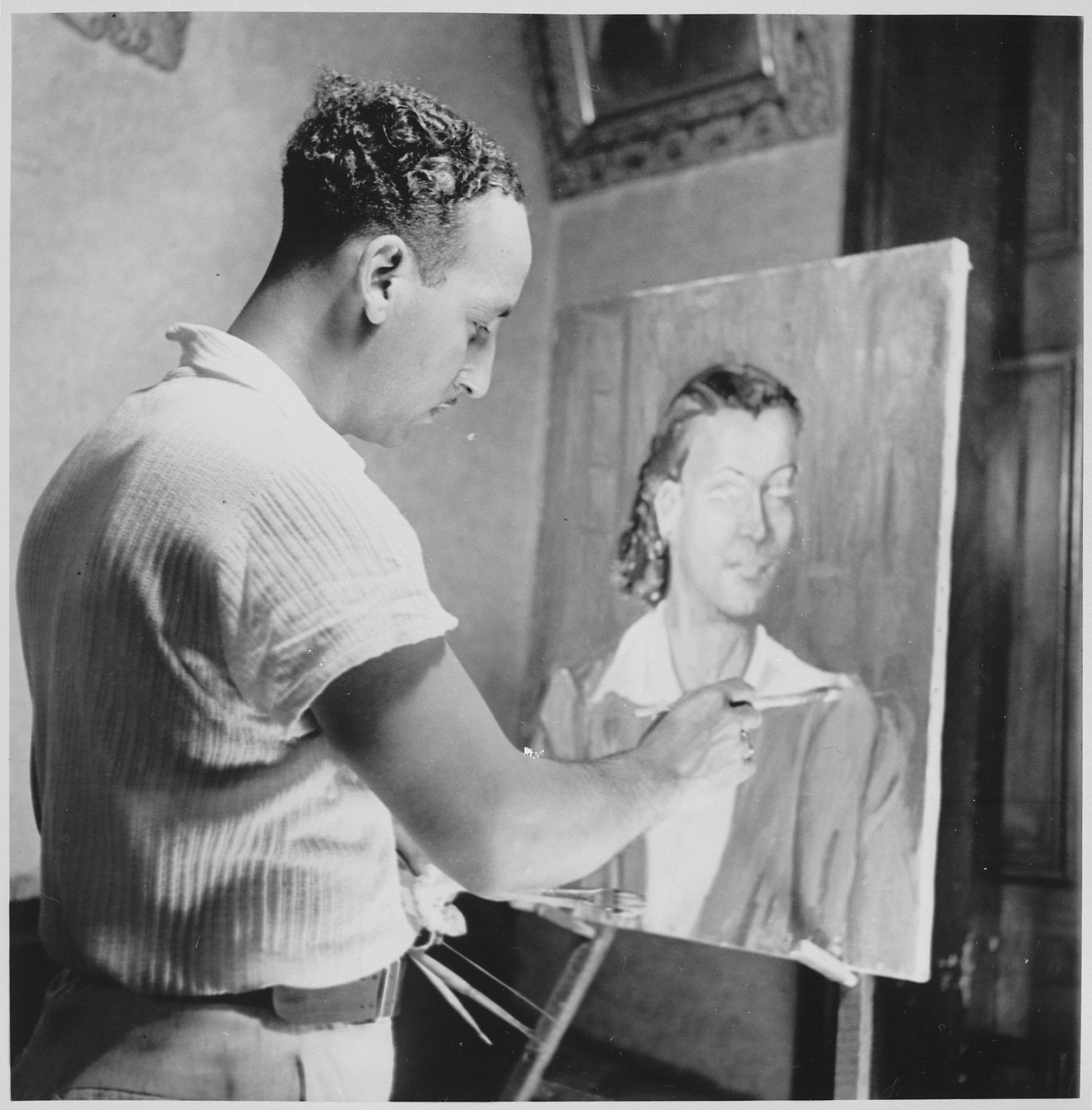
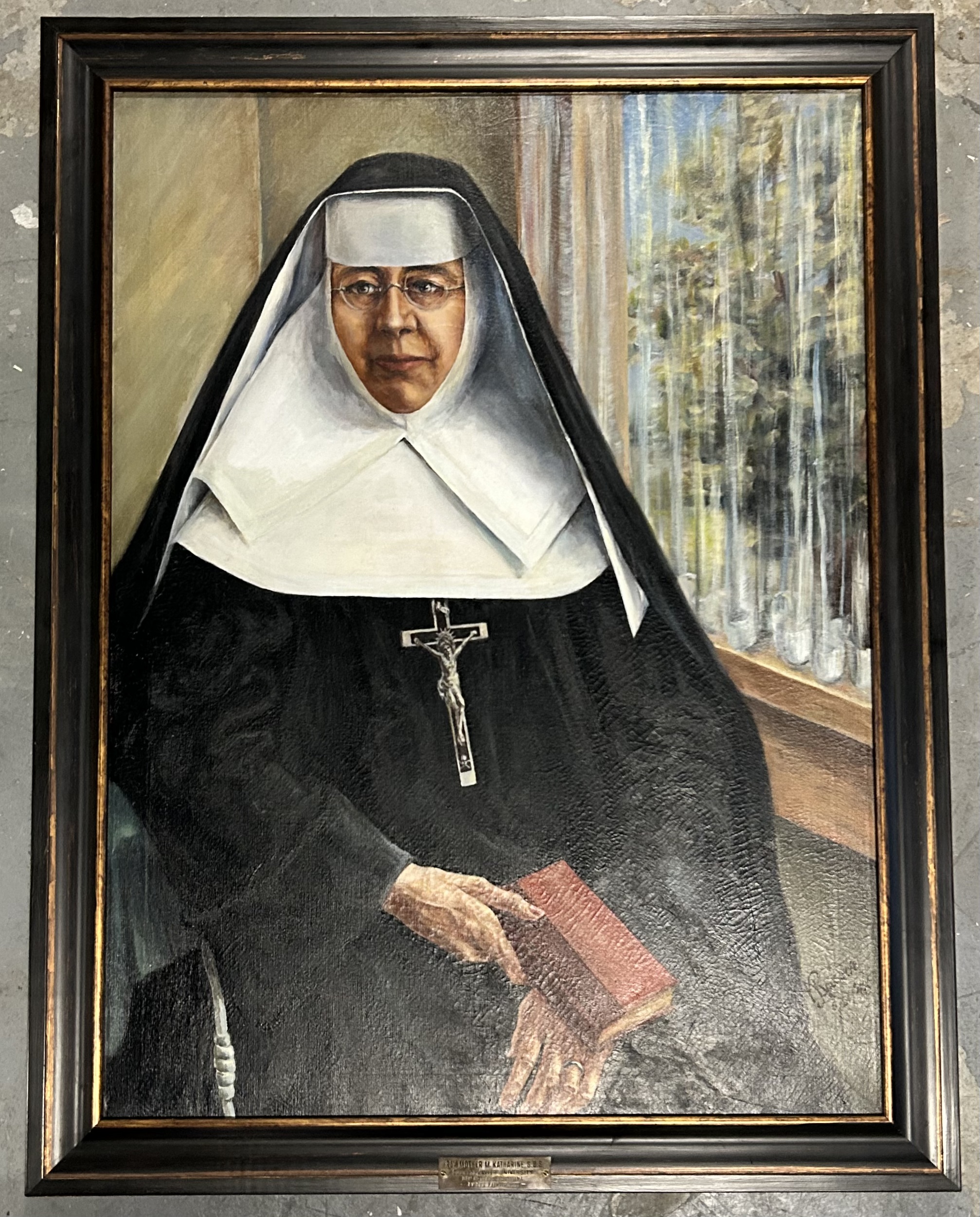
Numa Rousseve was a foundational figure in the early development of the visual arts at Xavier University of Louisiana—a pioneering artist and educator whose influence helped define the character of the university’s art program during its formative years. A native of New Orleans, Rousseve graduated from Xavier University in 1936, a time when the institution was still expanding its liberal arts and fine arts curricula under the leadership of the Sisters of the Blessed Sacrament.
Following his graduation, Rousseve joined Xavier’s faculty and became one of its first art instructors. Working alongside Sister Lurana Neely, he helped establish the foundations of the Department of Fine Arts, introducing students to both traditional techniques and the idea that art could serve as a tool for community uplift. Archival photographs from the late 1930s and early 1940s show him teaching painting in Xavier’s early studios, nurturing a generation of young Black artists at a time when educational opportunities in the arts were extremely limited for African Americans.
In addition to his teaching career, Rousseve maintained an active studio practice. His work was recognized by the Harmon Foundation, one of the few national organizations at the time that promoted African American artists. A 1936 Harmon Foundation photograph titled Numa Rousseve, Artist and Teacher affirms his dual identity as both creator and mentor. Though few of his original works have been publicly documented, his artistic and pedagogical legacy endures through the countless students and colleagues he influenced.
Rousseve’s commitment to education and community engagement reflected the broader mission of Xavier University: to develop Black intellectual and creative excellence within a Catholic framework of service and social responsibility. His early leadership helped lay the groundwork for the vibrant art department that would later nurture artists such as John T. Scott, Martin Payton, and Terrance Osborne.
Within the context of the Xavier University of Louisiana Art Collection, Numa Rousseve represents the institution’s origins—an artist who not only made art but also made space for art to thrive. His story embodies the intertwining of creativity, pedagogy, and faith that continues to define Xavier’s cultural and educational legacy.
William Pajaud Jr., Class of 1946
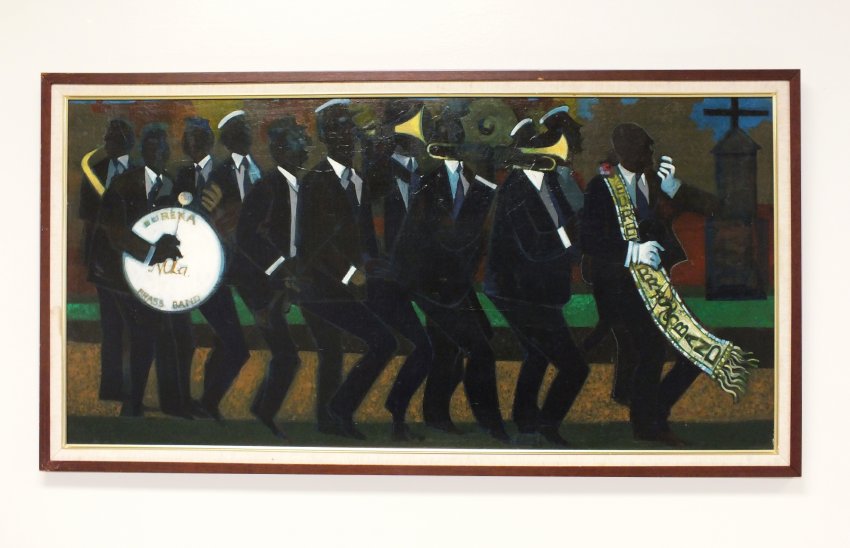
William Etienne Pajaud Jr. (August 3, 1925 – June 16, 2015) was a New Orleans-born artist whose vibrant watercolours and dedicated advocacy for African-American art earned him both critical and cultural significance. He arrived in the world in the city so rich with rhythm, where his father worked as a jazz musician in New Orleans funeral processions and his mother as a social worker.
Pajaud studied at Xavier University of Louisiana, receiving his undergraduate degree in fine arts and signaling the beginning of his formal artistic journey. He later moved to Los Angeles where he enrolled at the Chouinard Art Institute, becoming the first African-American student to graduate from its day school, a milestone achieved despite the racial prejudice he encountered.
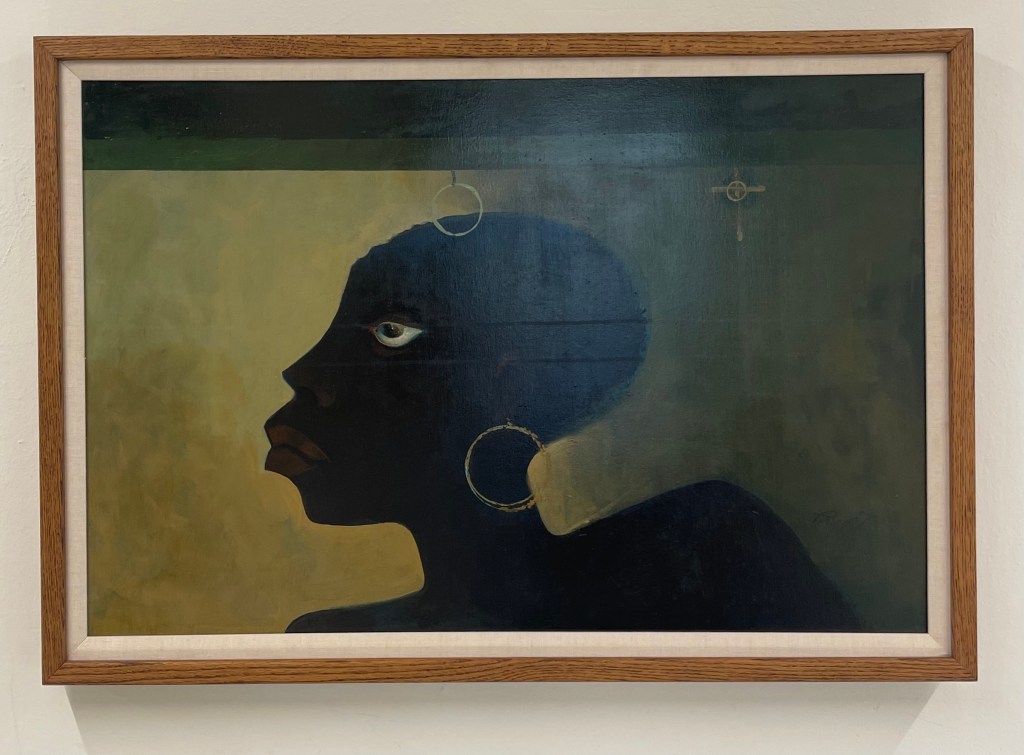
In his art, Pajaud returned again and again to the imagery of jazz funerals, street scenes of Black life in New Orleans, exuberant women, and urban celebration. He described his creative impulse as emerging from “life’s awesome rhythms with dignity in pain, joy, poverty, and often jubilation.”
Yet Pajaud’s influence extended far beyond his own studio. In 1957 he joined the Golden State Mutual Life Insurance Company in Los Angeles as art director and ultimately vice-president, and in 1965 he founded its art collection—one of the most significant corporate collections of African-American art assembled in the United States. His dual roles as creator and curator made him a key connector in the art world, elevating lesser-known African-American artists and reinforcing the cultural value of their work.
Pajaud’s work has been exhibited widely, including shows such as “William Pajaud: The Sights and Sounds of My New Orleans” at the California African American Museum in Los Angeles (2000) and “Now Dig This!: Art and Black Los Angeles 1960-1980” at the Hammer Museum (2011). His paintings reside in major public collections, including the Amistad Research Center and museums such as the Pushkin Museum in Russia.
For the Xavier University of Louisiana Art Collection, William Pajaud represents both an alumnus and an artistic exemplar: someone who transformed the visual narratives of Black life into lyrical celebration, and who, through his curatorial leadership, ensured that Black creativity would be documented, collected, and respected.
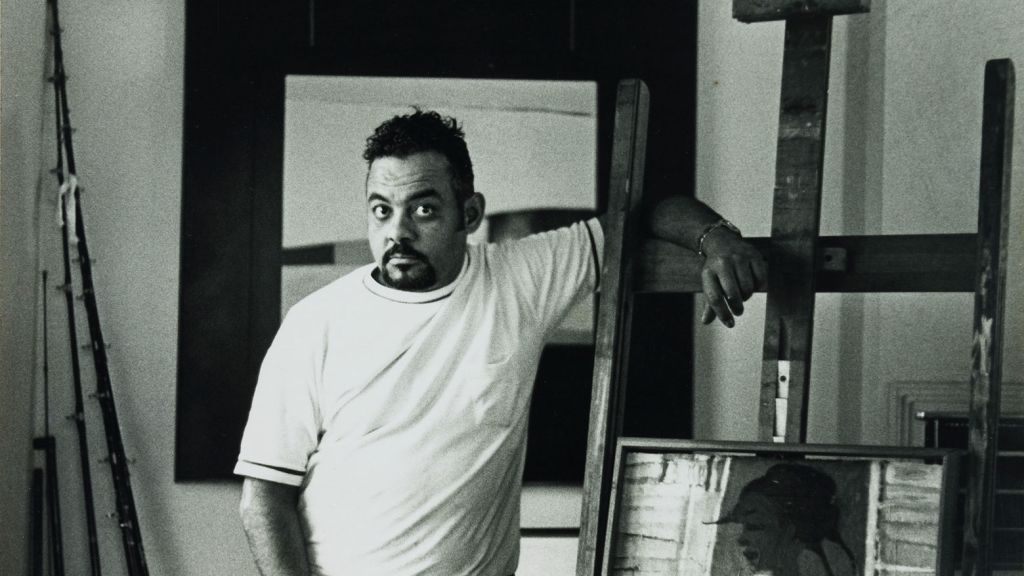
Ernest T. Ross, Class of 1956
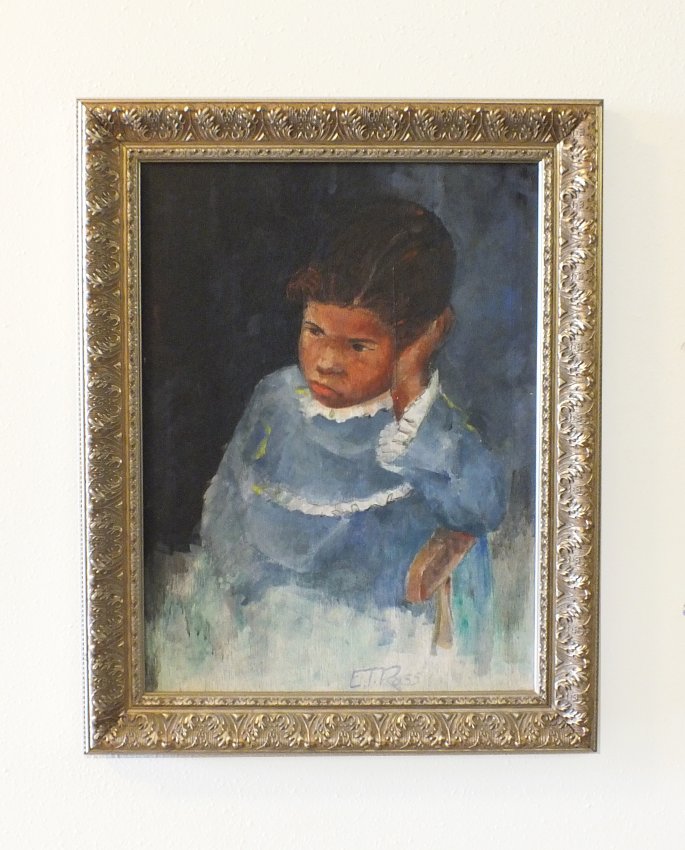
Ernest T. Ross (1929 – 2020) was an accomplished American sculptor whose career spanned more than six decades and whose work bridged the disciplines of academic training and modern African American art. Born in 1929, Ross earned his Bachelor of Arts degree from Xavier University of Louisiana in 1956 before completing a Master of Arts at the University of Notre Dame in 1959. At Notre Dame he studied under the renowned Croatian sculptor Ivan Meštrović, whose classical approach to form and emphasis on spiritual humanism would leave a lasting imprint on Ross’s work.
Ross developed a distinct voice in modern sculpture, working primarily in wood, stone, and bronze. His practice reflected a commitment to elevating the human figure as a site of dignity, discipline, and introspection. Like many artists of his generation, Ross navigated the racial and institutional barriers of mid-century America while achieving national recognition through his sculptural installations, teaching positions, and public commissions. He was described in his obituary as “a nationally recognized artist with sculptures in museums, college campuses, and private collections throughout the country.”
Among his most renowned works is Self-Sculptor (1985), a Missouri limestone piece now in the collection of the National Gallery of Art in Washington, D.C. The work embodies Ross’s philosophy of creation as self-discipline and spiritual labor — the artist quite literally carving his own form into being. Throughout his career, Ross taught and exhibited widely, holding faculty positions at institutions including William Woods College and Ivy Tech Community College, where he mentored young artists in both technical craft and philosophical approach.
Ross’s sculptures appeared in numerous group and solo exhibitions across the United States. His works were featured in academic gallery circuits, regional museums, and public art projects throughout the 1960s through 1980s. In addition to his representation in the National Gallery of Art, his pieces have been documented in collections of universities and private patrons across Louisiana, Indiana, and Illinois. While a complete exhibition record is still being compiled, Ross’s presence in national collections and critical discourse attests to a career deeply embedded in the mid-century American art movement and the evolution of Black modernism.
Ernest T. Ross passed away in 2020, leaving behind a legacy of quiet excellence and enduring craftsmanship. For the Xavier University of Louisiana Art Collection, his work stands as a powerful testament to the university’s role in nurturing artists whose influence reaches far beyond campus grounds — into national collections, public spaces, and the broader story of American art
Frank Hayden, Class of 1957
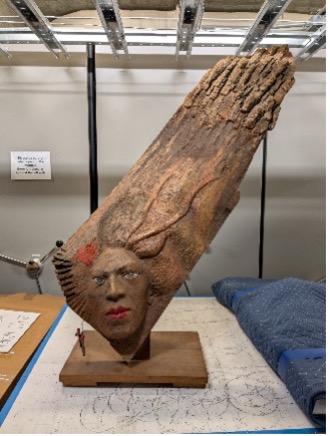
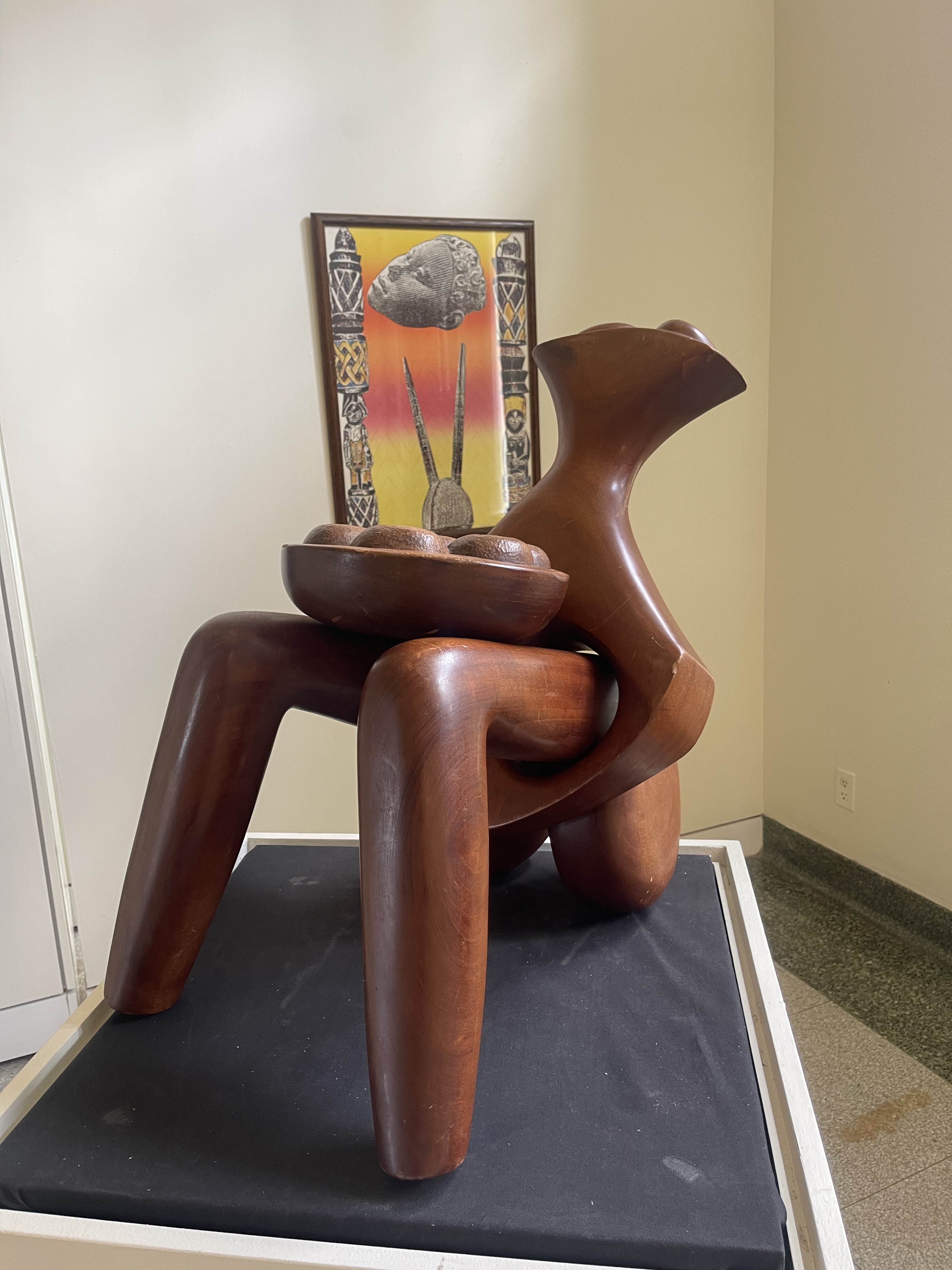
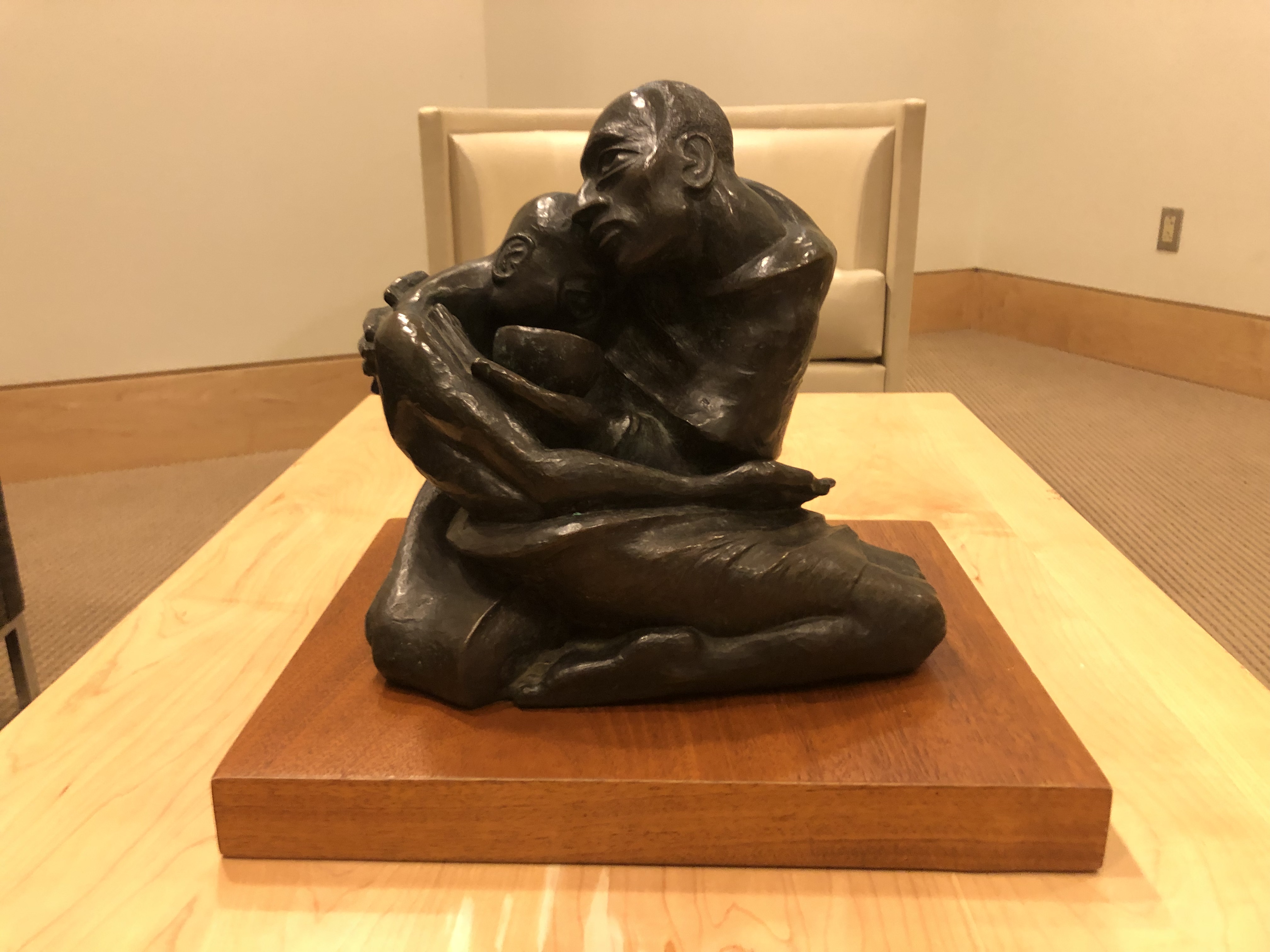
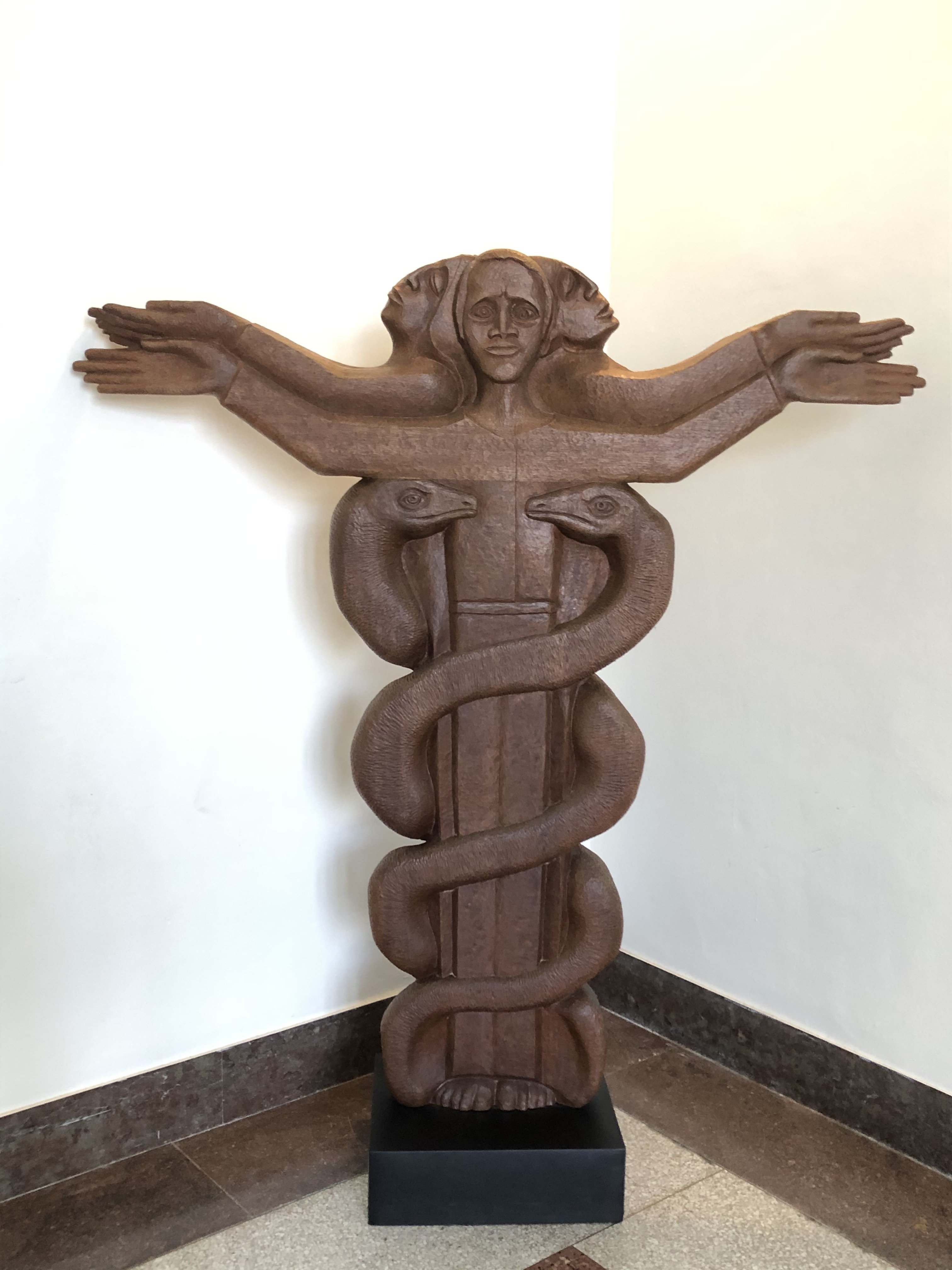
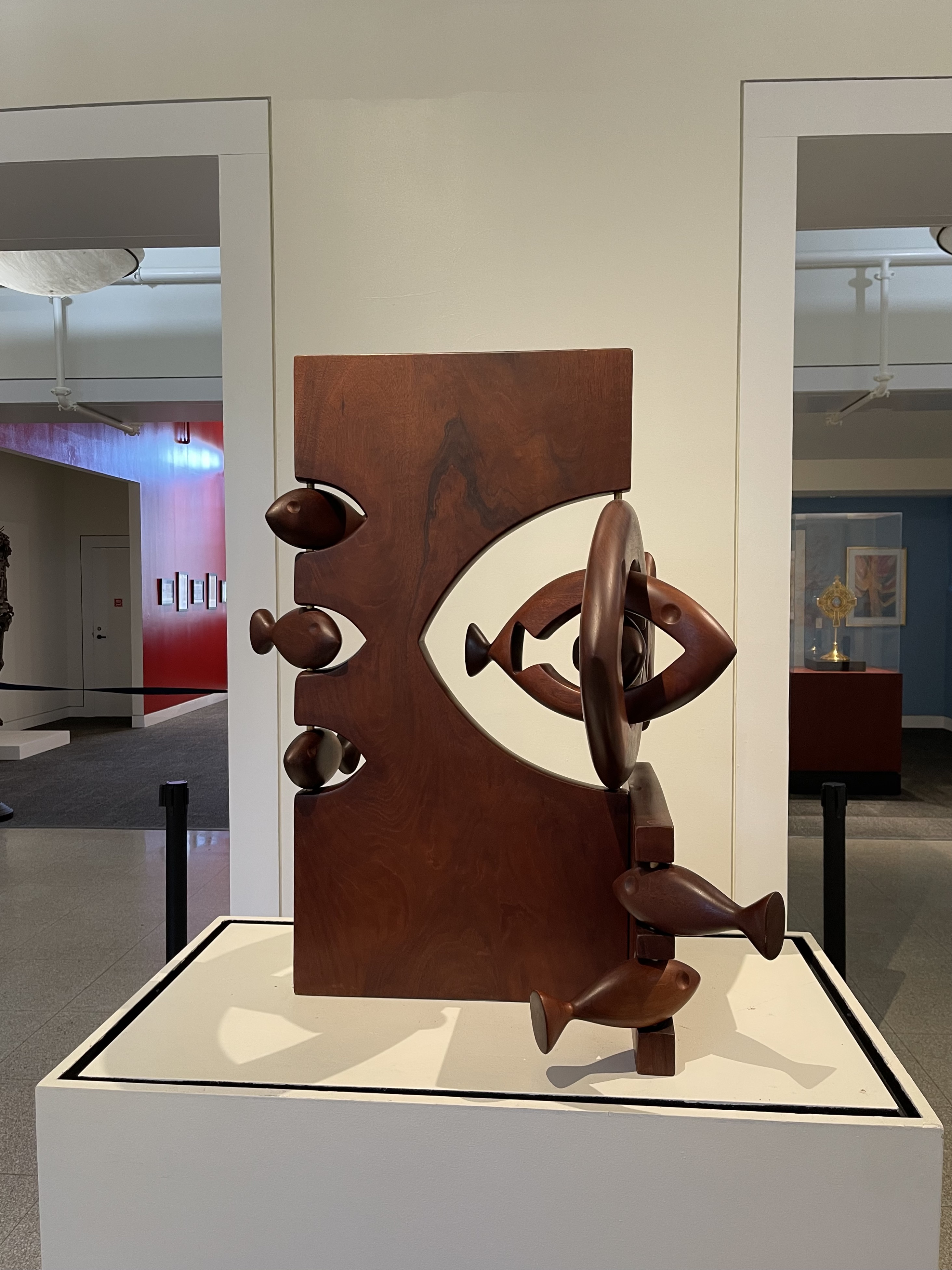
Frank Hayden (1934–1988) was a sculptor whose life and work bridged deep personal conviction, formal excellence, and the social currents of his time. Born on June 10 1934 in Memphis, Tennessee, Hayden grew up in a single-parent household after his father’s death when he was five. From a young age he attended Catholic schools, where the nuns recognised his artistic gifts and encouraged him to enter competitions.
Hayden’s scholarship to Xavier University of Louisiana in New Orleans (he graduated with a B.A. in Fine Arts in 1957) marked the beginning of his formal journey in art. At Xavier he received his first training in sculpture and a minor in German, positioning himself for further study.
Opting to continue his education at the University of Notre Dame, Hayden studied under the renowned Croatian-born sculptor Ivan Meštrović, earning his M.F.A. in 1959. Later fellowships took him to the Munich Art Academy (under Heinrich Kirchner) and to the Royal Danish Academy of Fine Arts in Copenhagen.
In 1961 Hayden moved to Baton Rouge, Louisiana, to join the faculty of Southern University, where he taught drawing and sculpture for more than two decades. In 1985 he was honoured as the university’s first Distinguished Professor.
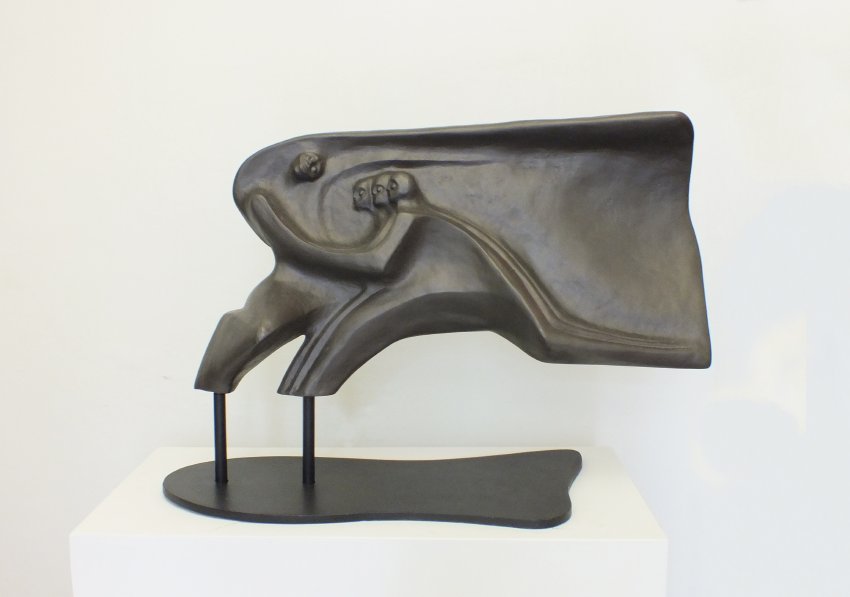
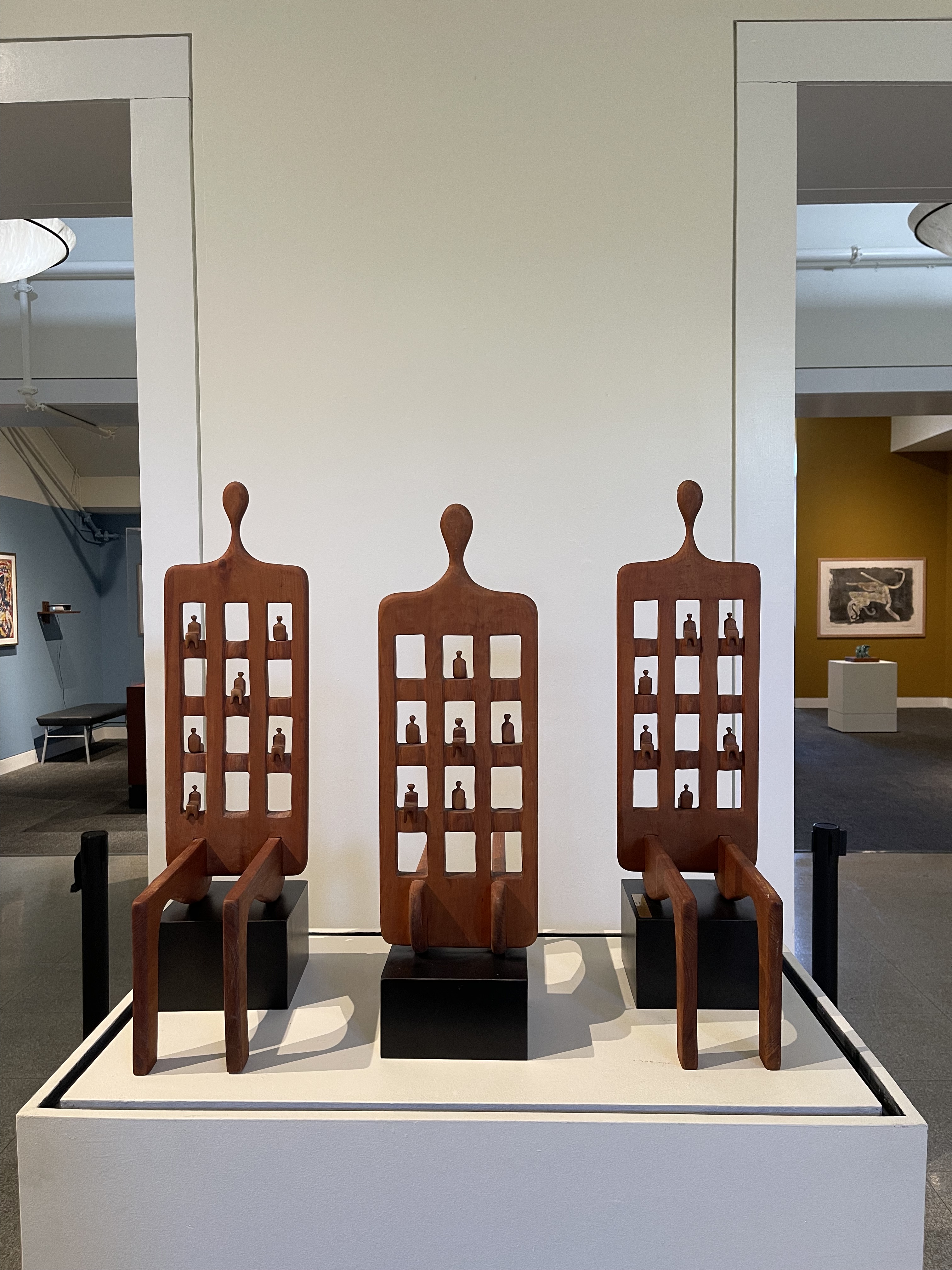
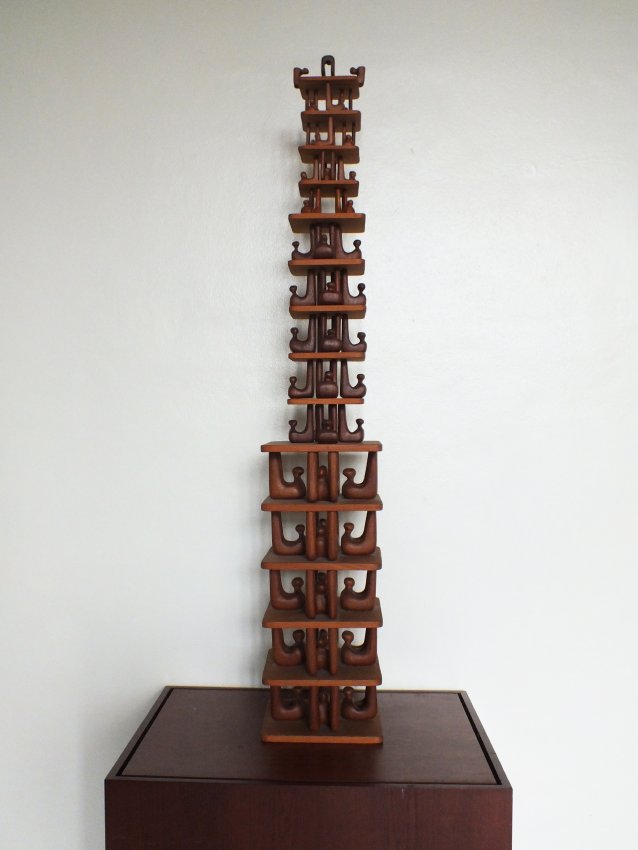
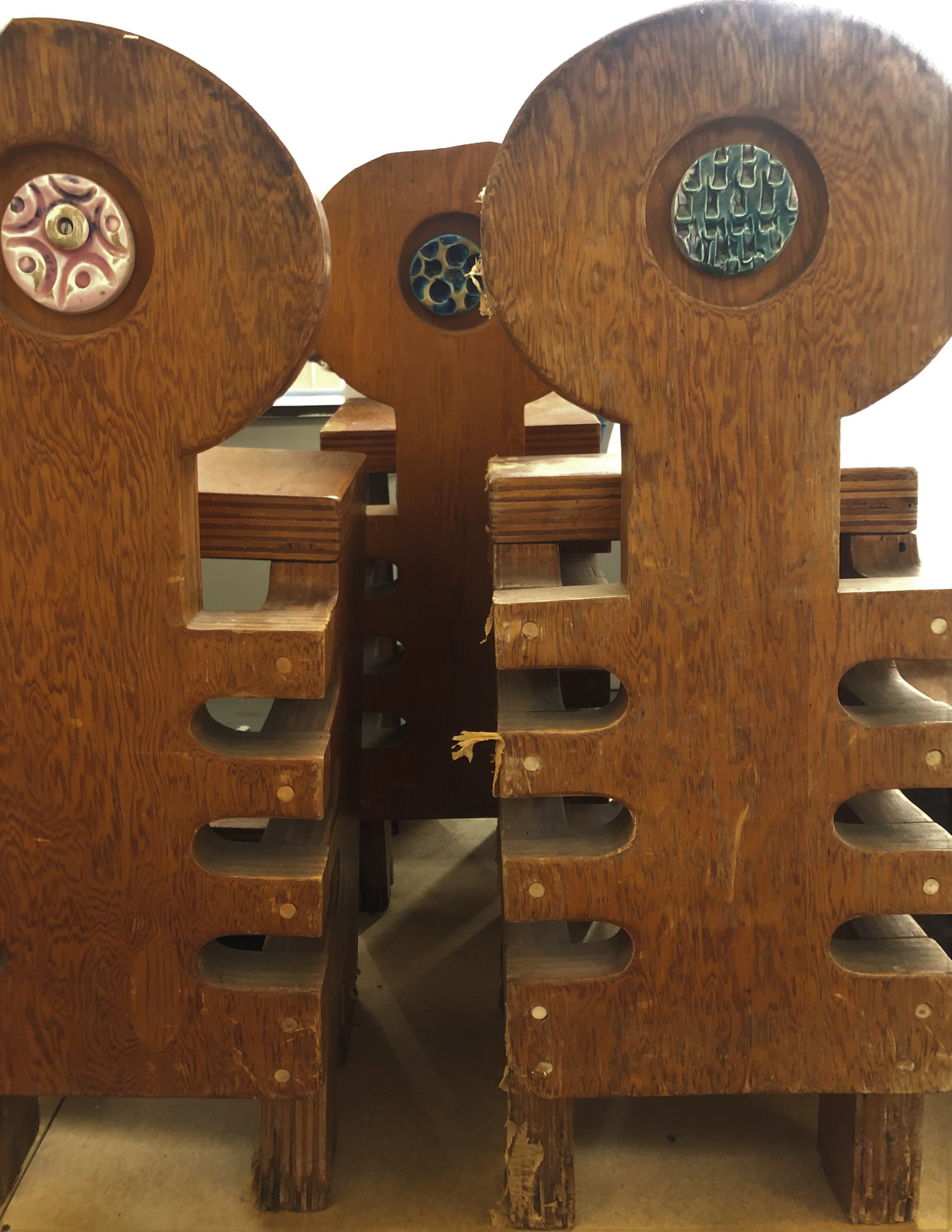
Hayden’s work is marked by a meditative yet powerful sensibility. Grounded in his Christian faith and shaped by the turbulent civil-rights era, his sculptures often engage themes of fellowship, family, justice, and spirituality. While deeply figurative, Hayden’s forms also carry abstraction, texture and inscriptions—working in woods, bronze, stone, clay and fibre-glass.
Among his significant public commissions are monuments in Baton Rouge and New Orleans: a ten-foot bronze Head of Oliver Pollock with accompanying frieze Marcha de Galvez downtown Baton Rouge; Red Stick on the Mississippi River levee; and a memorial to Martin Luther King Jr. in New Orleans dedicated in 1976.
Hayden’s own reflection on art encapsulates his ethos:
“My art does not recognize a hierarchy of ideas and materials. It simply saturates existence into a significant form. … The prospect of beauty is constant and is all that is needed to guide my hand and heart.”
Tragically, Hayden’s life was cut short when he died on January 30 1988. His legacy remains vivid in Louisiana’s artistic landscape, especially through his public works, his mentorship of younger generations, and his place in the narrative of African-American art in the 20th century.
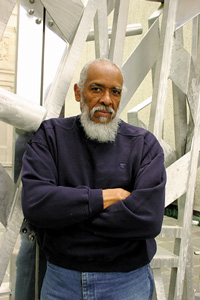
John T. Scott, Class of 1962
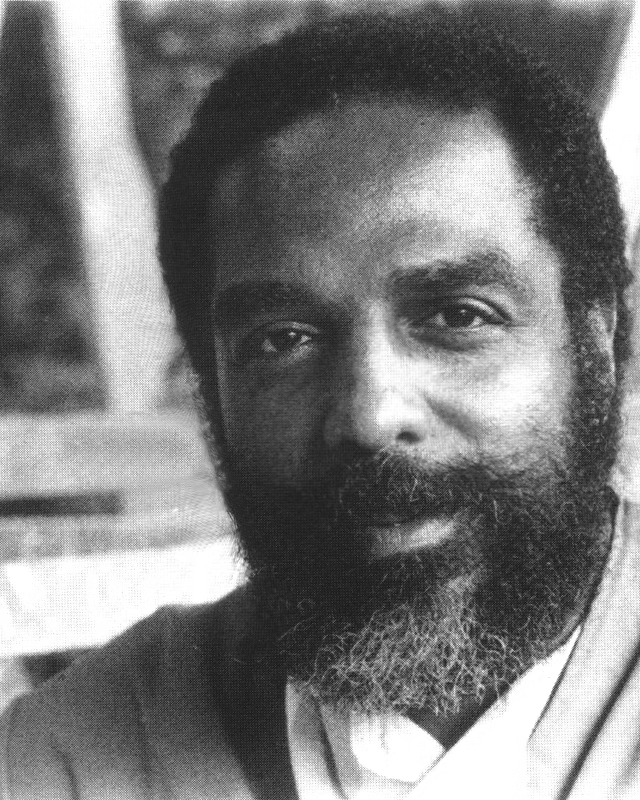
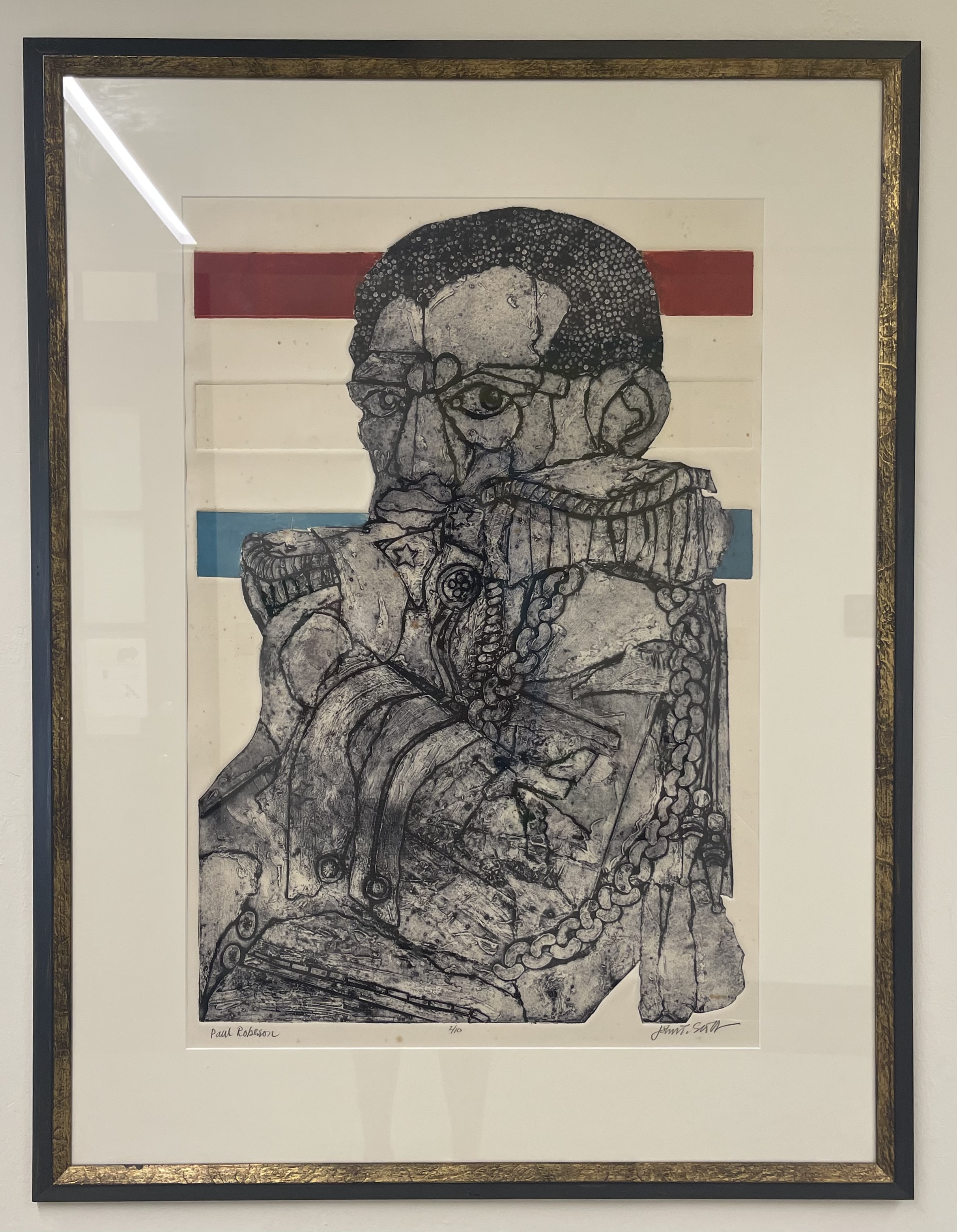
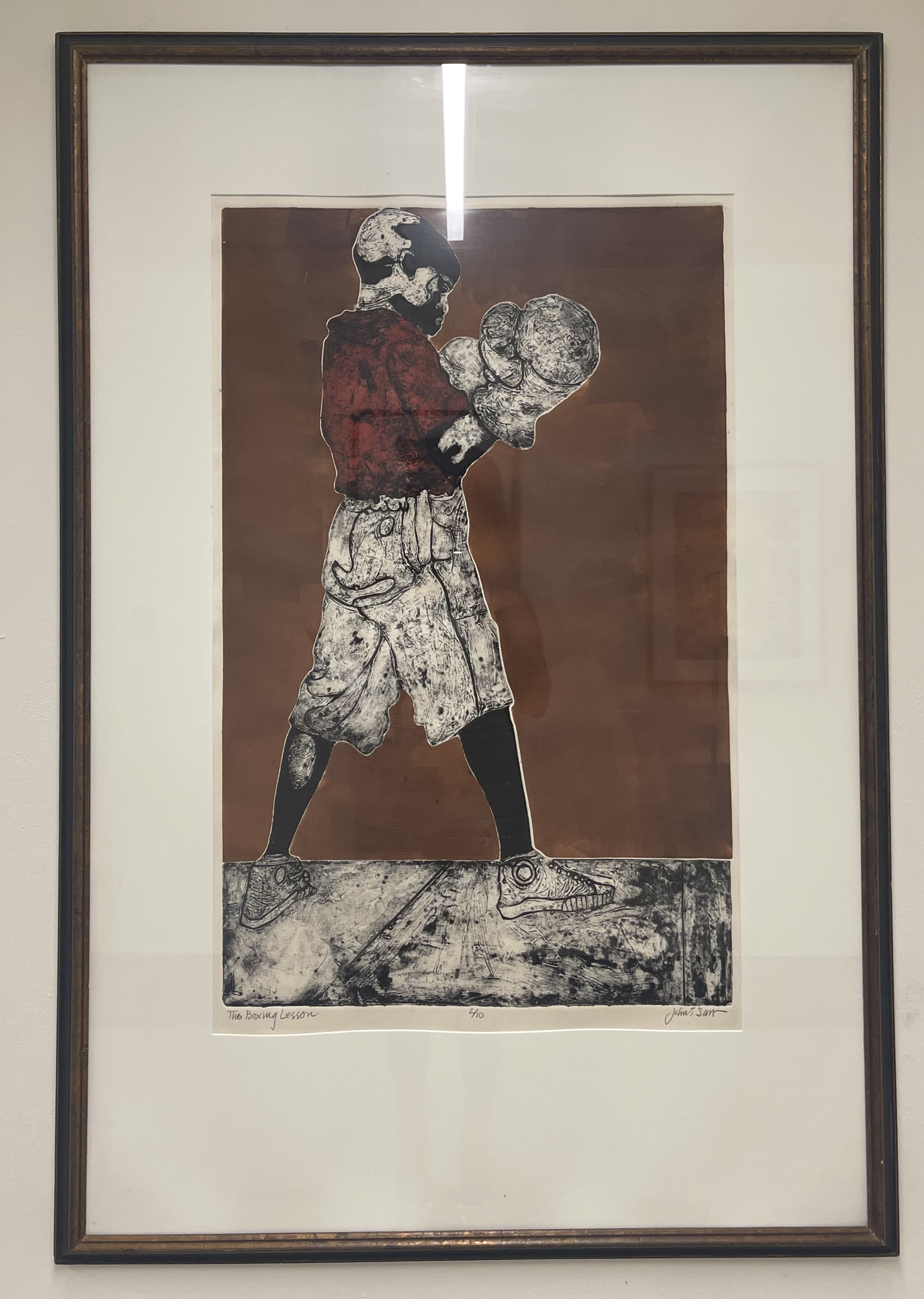
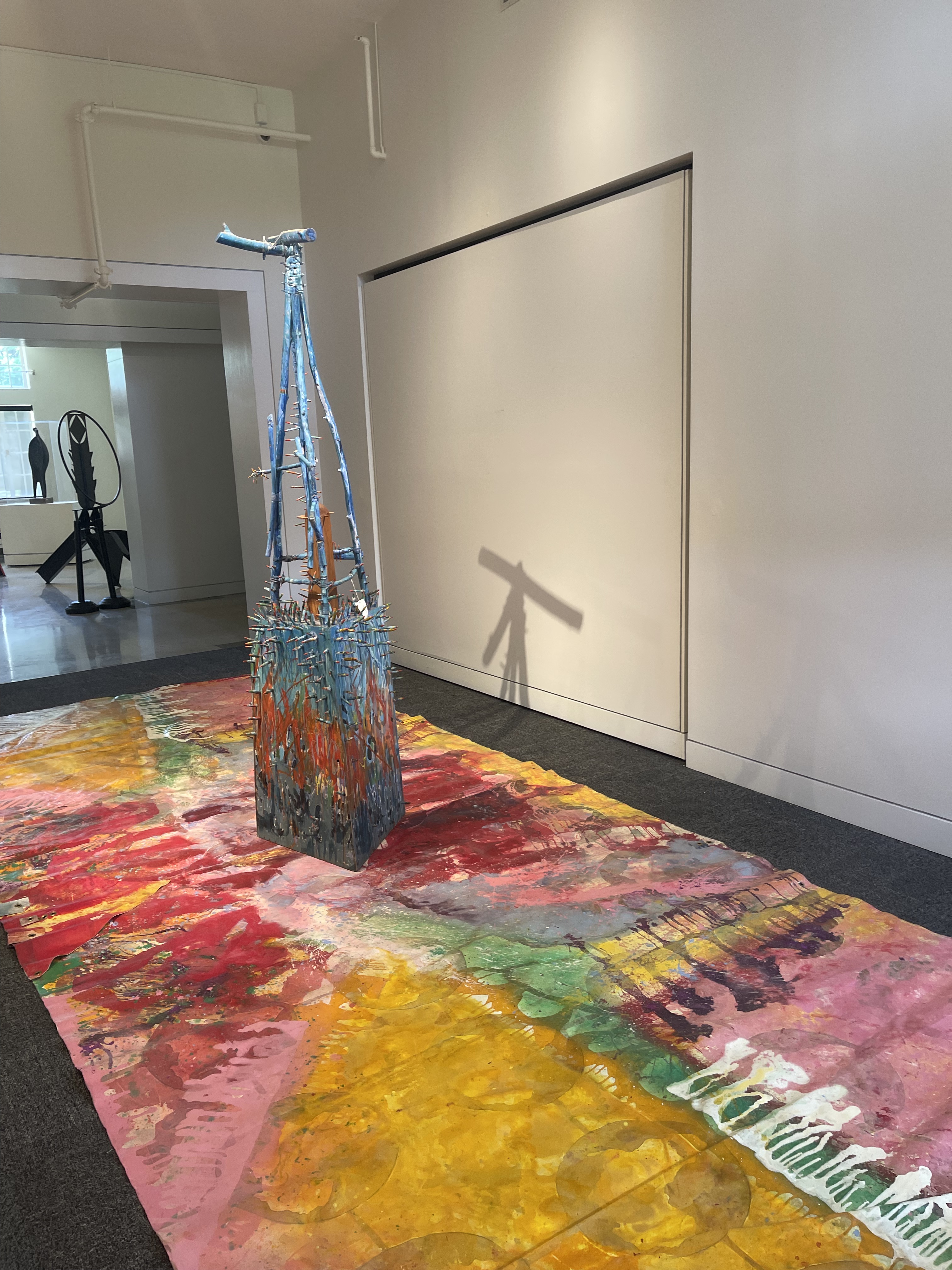
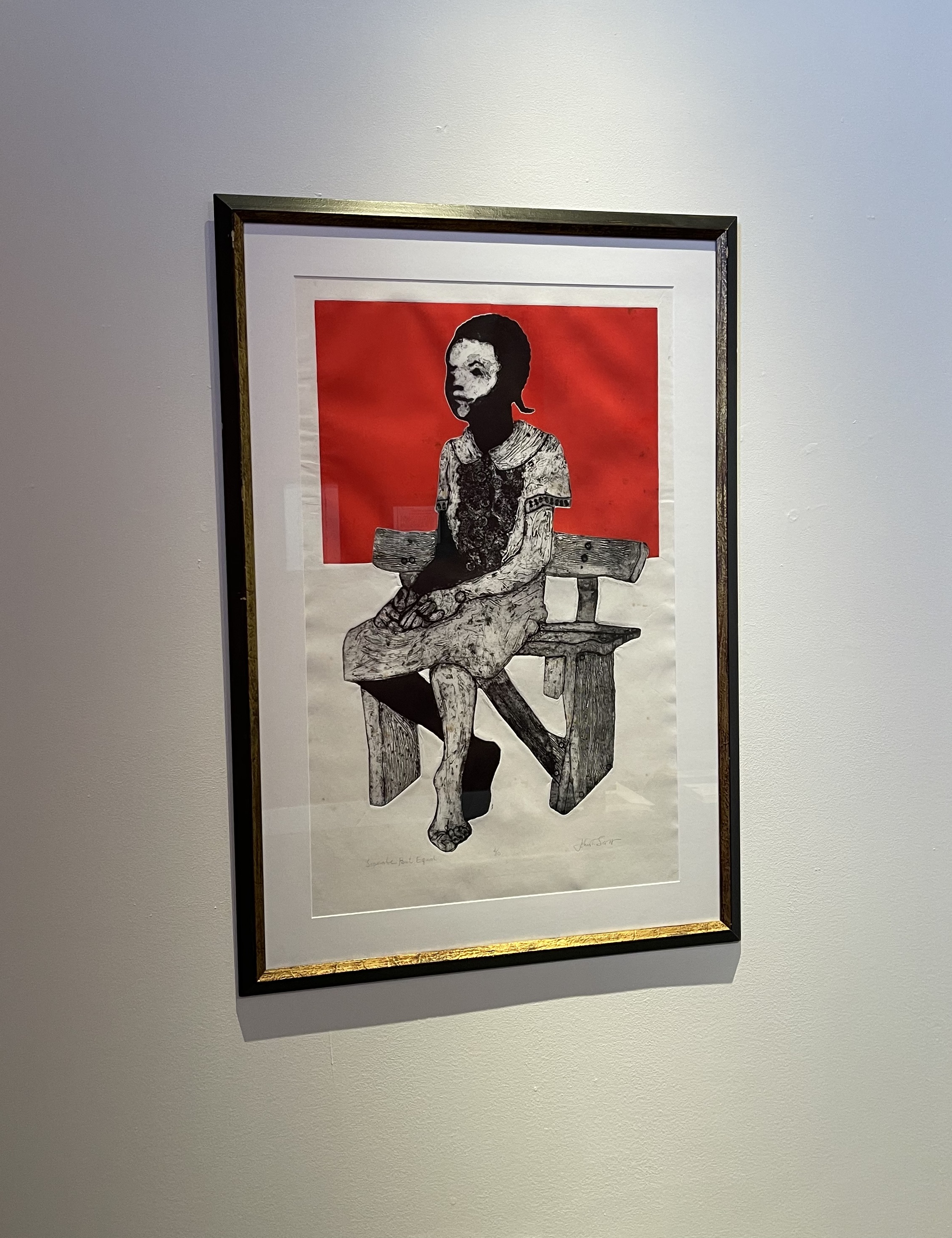
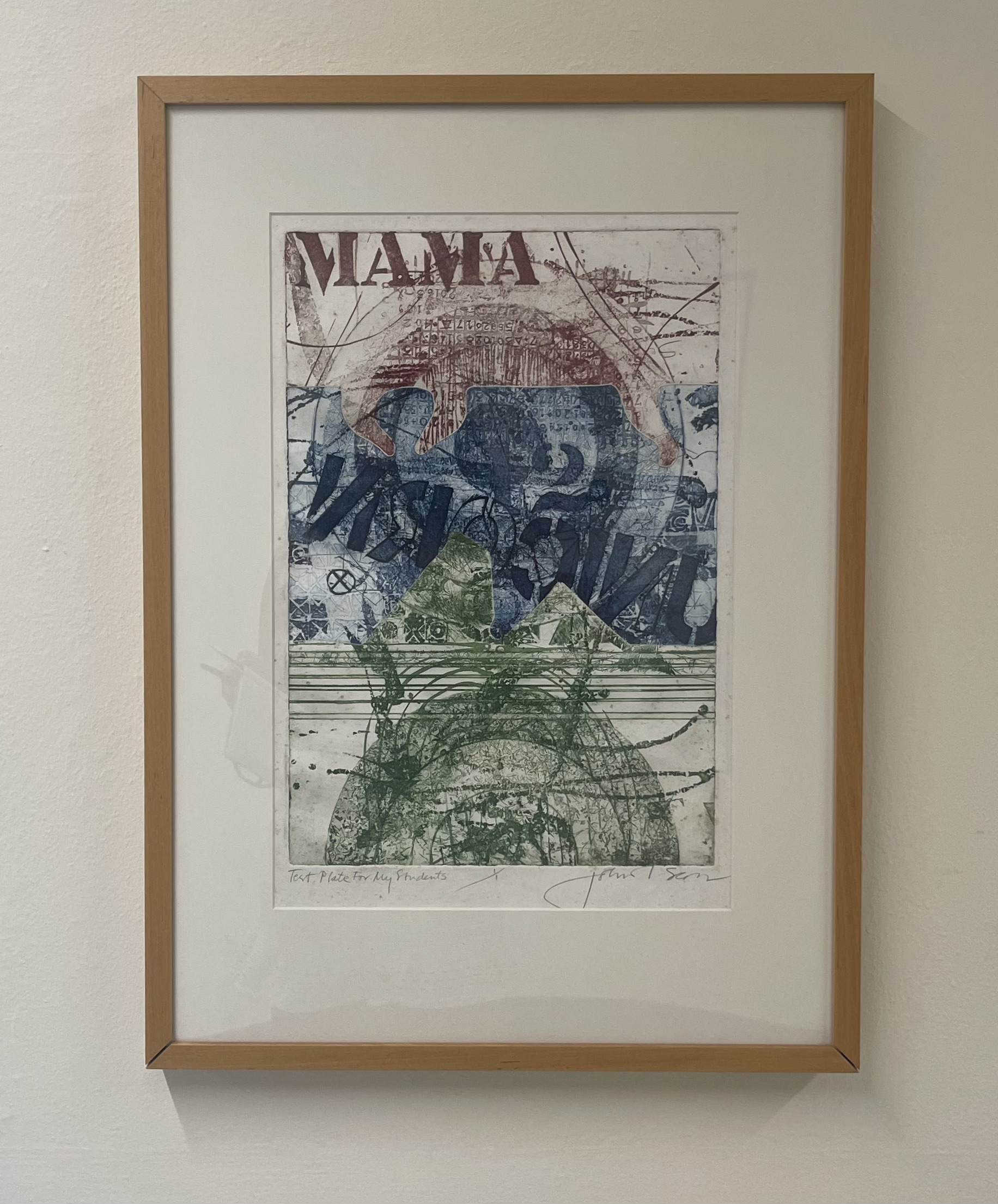
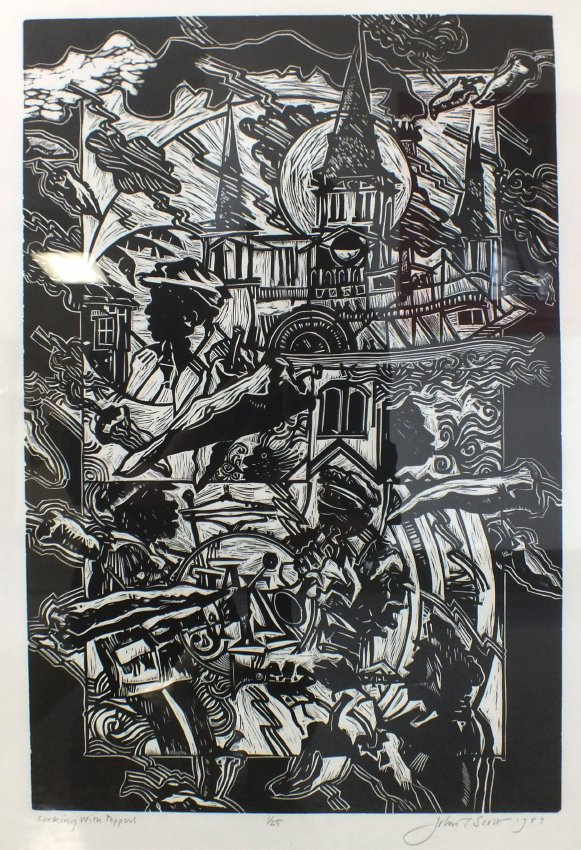
John T. Scott (June 30, 1940 – September 1, 2007) was one of the most influential artists to emerge from New Orleans and one of the most beloved figures in the history of Xavier University of Louisiana. A sculptor, printmaker, and educator, Scott’s career bridged art, music, and movement—his works embodying the rhythms of the city and the spirituality of the African diaspora.
Born and raised in the Lower Ninth Ward of New Orleans, Scott attended Xavier University of Louisiana, where he earned his Bachelor of Arts degree before completing his Master of Fine Arts at Michigan State University in 1965. He returned to Xavier to teach and would remain a pillar of the institution for over four decades, serving as professor and later chair of the Department of Fine Arts. Through his teaching, mentorship, and advocacy, Scott shaped generations of artists, many of whom—such as Martin Payton, Steve Prince, and Ayo Scott—have gone on to define contemporary Southern art.
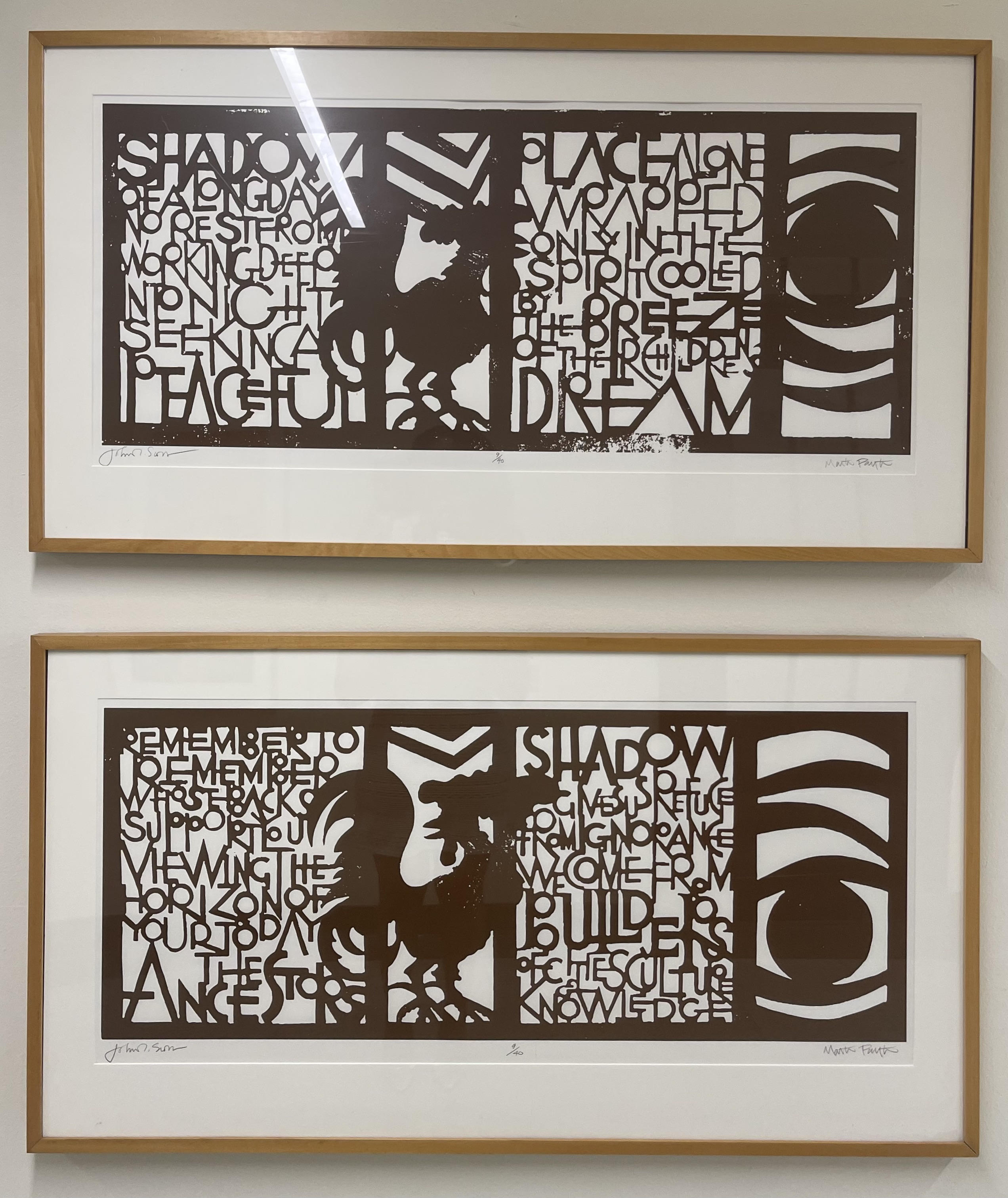
Scott’s artistic practice blended abstraction with African diasporic forms, infusing metal, wood, and found materials with a kinetic energy inspired by jazz, dance, and ritual. His sculptures and prints draw from the visual and sonic vocabulary of New Orleans: spiraling patterns of movement, syncopated rhythms, and a sense of communal vitality. He often referred to his work as “visual jazz,” an expression of improvisation and cultural continuity.
Among his best-known public commissions are Spirit Gates (1994) at the New Orleans Museum of Art and Spirit House (2002), a collaboration with Martin Payton located in the city’s Gentilly neighborhood. Both pieces exemplify his ability to transform metal into living, breathing form—bridging spirituality, craftsmanship, and cultural history. In 1992, he was awarded the prestigious MacArthur Fellowship, affirming his national significance as an artist and educator.
John T. Scott’s impact on the Xavier University of Louisiana Art Collection is profound and enduring. As both an alumnus and a longtime faculty member, he helped build the very foundations of the university’s visual arts identity. Many of the artists represented in the collection trace their creative lineage to his teaching and mentorship. His works within the collection stand not only as exemplary expressions of his artistic philosophy but also as living testaments to Xavier’s mission—to cultivate Black excellence, creativity, and cultural leadership.
Scott’s legacy continues to resonate across the Xavier campus and the city of New Orleans. His art captures a distinct sense of place—celebrating the beauty, struggle, and resilience of the community that shaped him. Through his teaching, mentorship, and monumental body of work, John T. Scott remains the heartbeat of the Xavier University of Louisiana Art Collection.

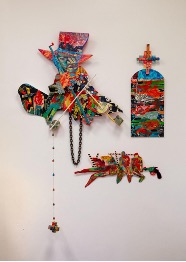
Theodore “Ted” J. Jones, Class of 1962
Theodore J. Jones, often referred to as Ted Jones, is an American visual artist originally from New Orleans whose wide-ranging practice encompasses painting, printmaking, relief sculpture (notably copper repoussé), and photography. He earned his Bachelor of Arts degree at Xavier University of Louisiana, and continued his graduate studies at Michigan State University (M.A.) and later at University of Montana (M.F.A.).
Jones’s art is deeply rooted in African-American experience and spirituality. His imagery often draws from biblical narratives and universal themes of hope, suffering, renewal and faith. He describes his studio space as his “chapel” and his creations as “offerings and prayers,” reflecting his belief in art as a sacred process rather than just aesthetic production.
Over more than three decades he taught art at institutions including Tennessee State University and Fisk University, where he instructed in printmaking, design, sculpture and photography. His work has been exhibited in venues such as the Smithsonian Anacostia Community Museum and the Crystal Bridges Museum of American Art among others, and is held in public collections.
For the Xavier University of Louisiana Art Collection, Jones’s significance is twofold. As an alumnus, he exemplifies the creative potential nurtured within the institution; as an artist whose subject matter speaks to African-American identity, spirituality and movement, he enriches the collection’s mission of elevating Black artistic voices and Southern regional culture. His inclusion helps trace a lineage of Xavier-affiliated artists who have expanded the narratives of art from New Orleans and beyond.


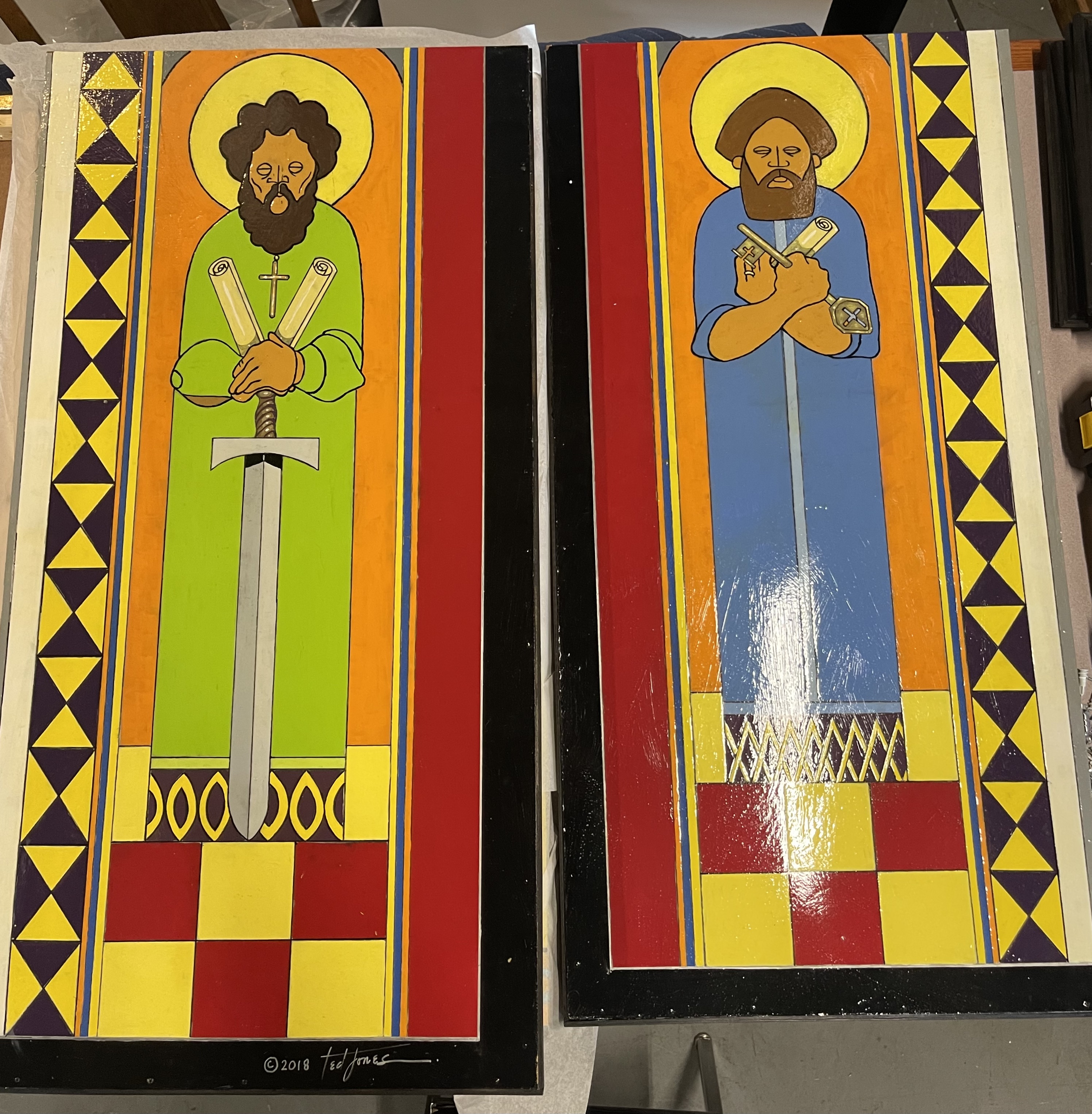
Martin F. Payton, Class of 1973
Martin Payton is an influential American sculptor whose work draws deeply from African-American heritage, jazz improvisation, and industrial material culture.
Payton was raised in New Orleans, a city steeped in musical traditions and visual culture, and this environment would profoundly shape his artistic trajectory. He earned his Bachelor of Fine Arts (BFA) from Xavier University of Louisiana, where he studied under the prominent New Orleans artist John T. Scott, who became both mentor and collaborator. He then went on to obtain a Master of Fine Arts (MFA) from Otis College of Art and Design in Los Angeles (formerly Otis Art Institute).
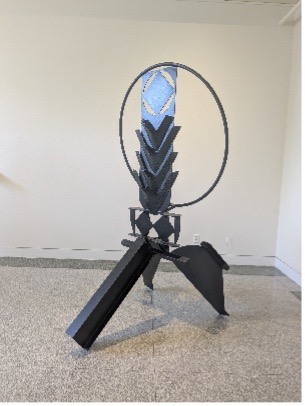
Originally working in two-dimensional media, Payton’s practice evolved as he encountered industrial scrap and welding techniques. A pivotal moment came when he began working with steel I-beams and other reclaimed metal—transforming found materials into expressive sculpture.
His sculptures typically feature monochromatic steel, often left in a dark patina so as to emphasize form, line, texture, and the improvisatory quality of jazz. He describes his process as akin to “drawing with steel” and views his practice in the lineage of African blacksmith traditions.
Musically inspired, his work frequently references rhythm, polyrhythms, and movement—drawing from the aesthetics of New Orleans jazz and African‐diasporic cultural rhythms.
Payton served as a professor of art for many years, notably at Southern University in Baton Rouge, where he taught from 1990 until his retirement in 2010 or 2011. Prior to that, he also taught in New Orleans and worked as artist-in-residence in public schools.
Alongside his academic career, Payton undertook public art commissions. Most notably, in collaboration with John T. Scott, he created Spirit House (2002) in the Gentilly neighborhood of New Orleans—a project celebrating African-American contributions to the city.
Payton’s work is held in significant institutional collections, including the New Orleans Museum of Art (NOMA), the Ogden Museum of Southern Art, the Amistad Research Center at Tulane University, the William King Regional Arts Center in Virginia, and the Rosekrans Runnymede Sculpture Garden in California. His retrospective exhibitions (such as Broken Time: Sculpture by Martin Payton at the LSU Museum of Art) affirm his importance in the region and his ongoing influence.
Martin Payton occupies a unique position at the intersection of African-diasporic heritage, modernist abstraction, and the reuse of industrial detritus. Through his welded-steel sculptures, he reinterprets cultural memory, rhythm, labor, and place. His teaching legacy further extends his impact, mentoring younger generations of artists in the American South.
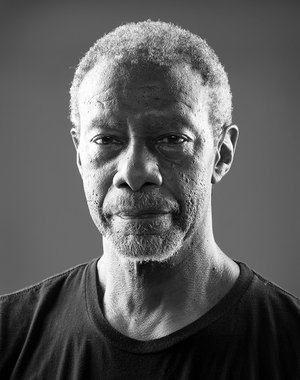
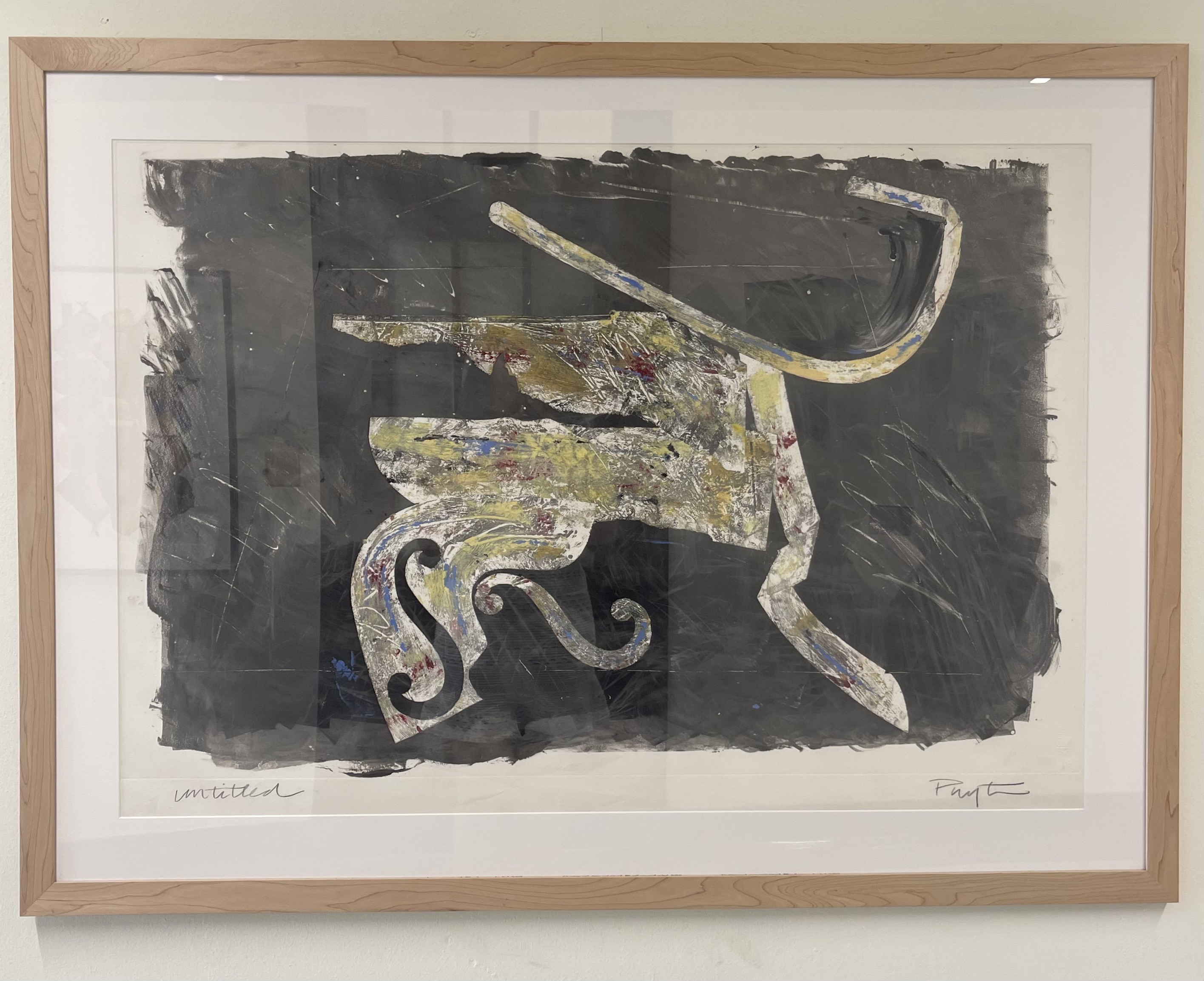
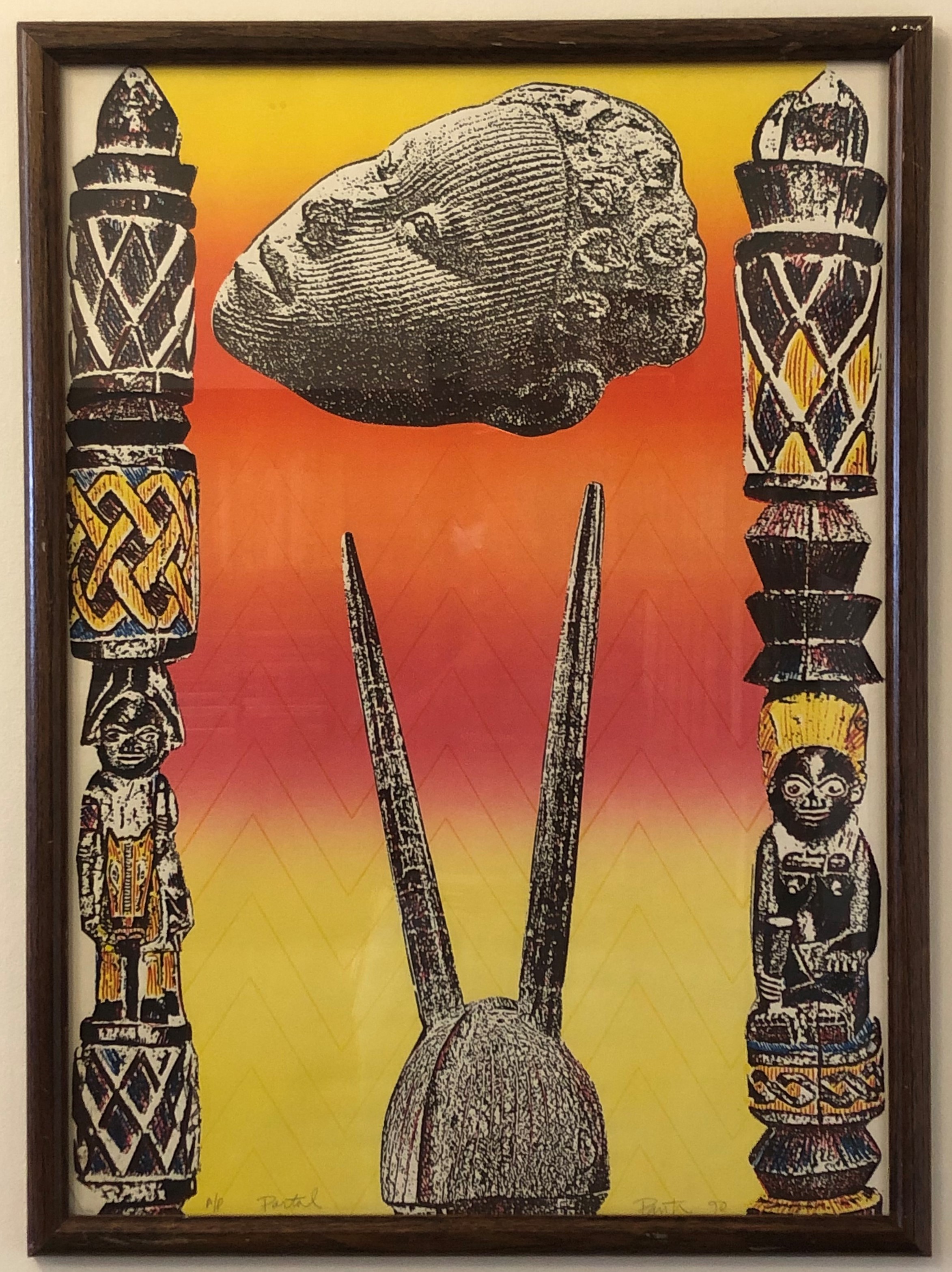
Louise Mouton Johnson, Class of 1976
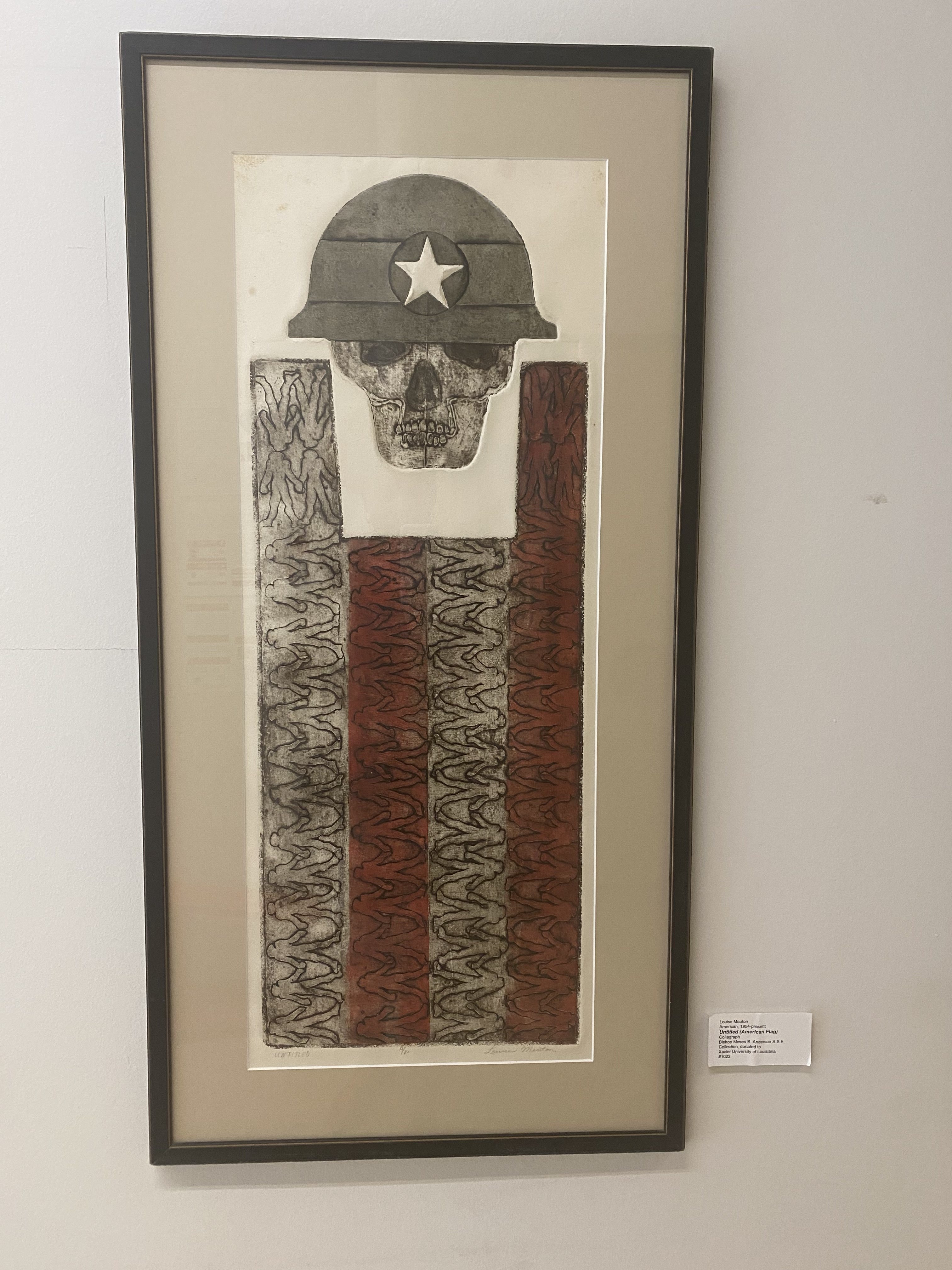
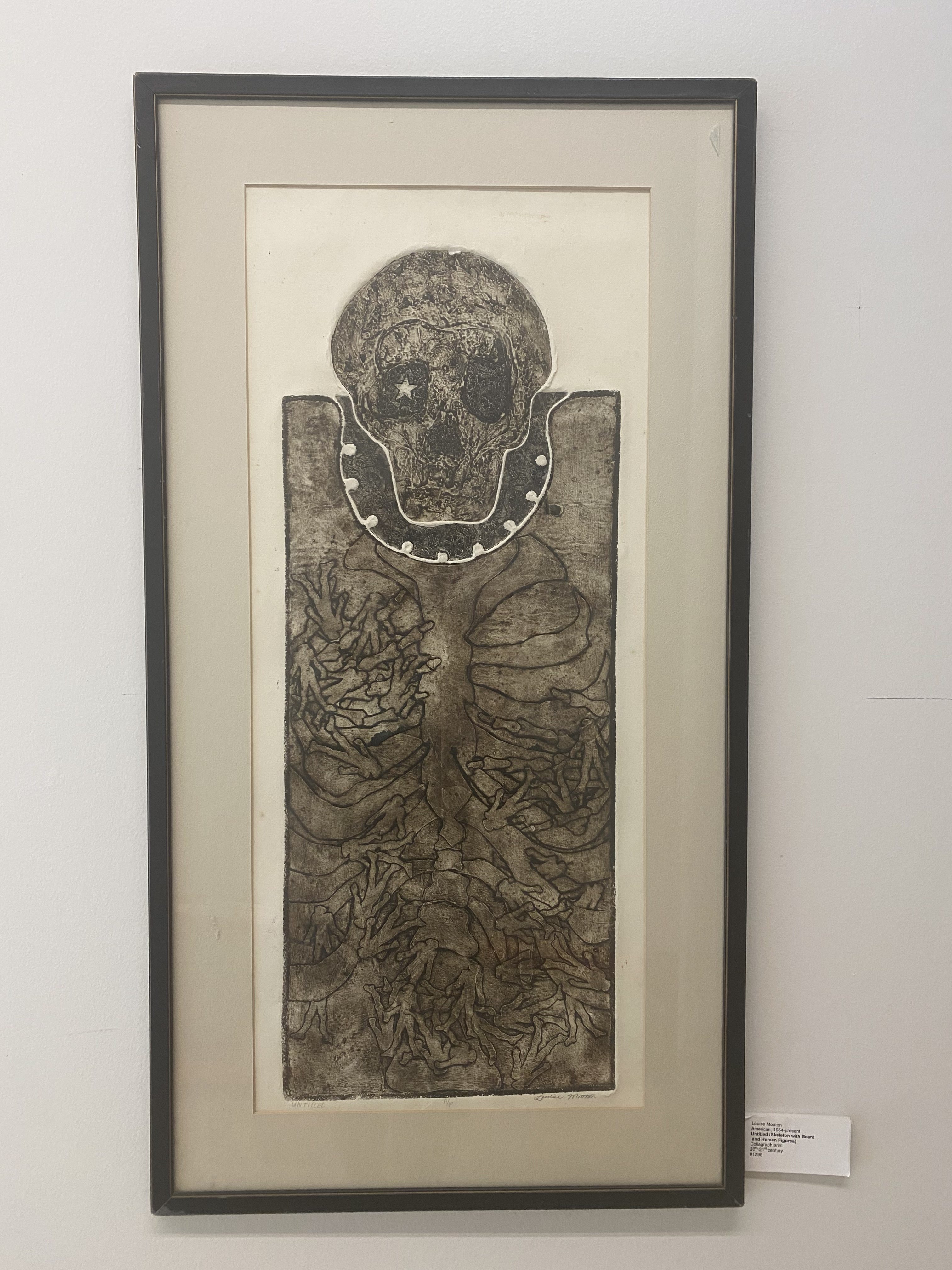
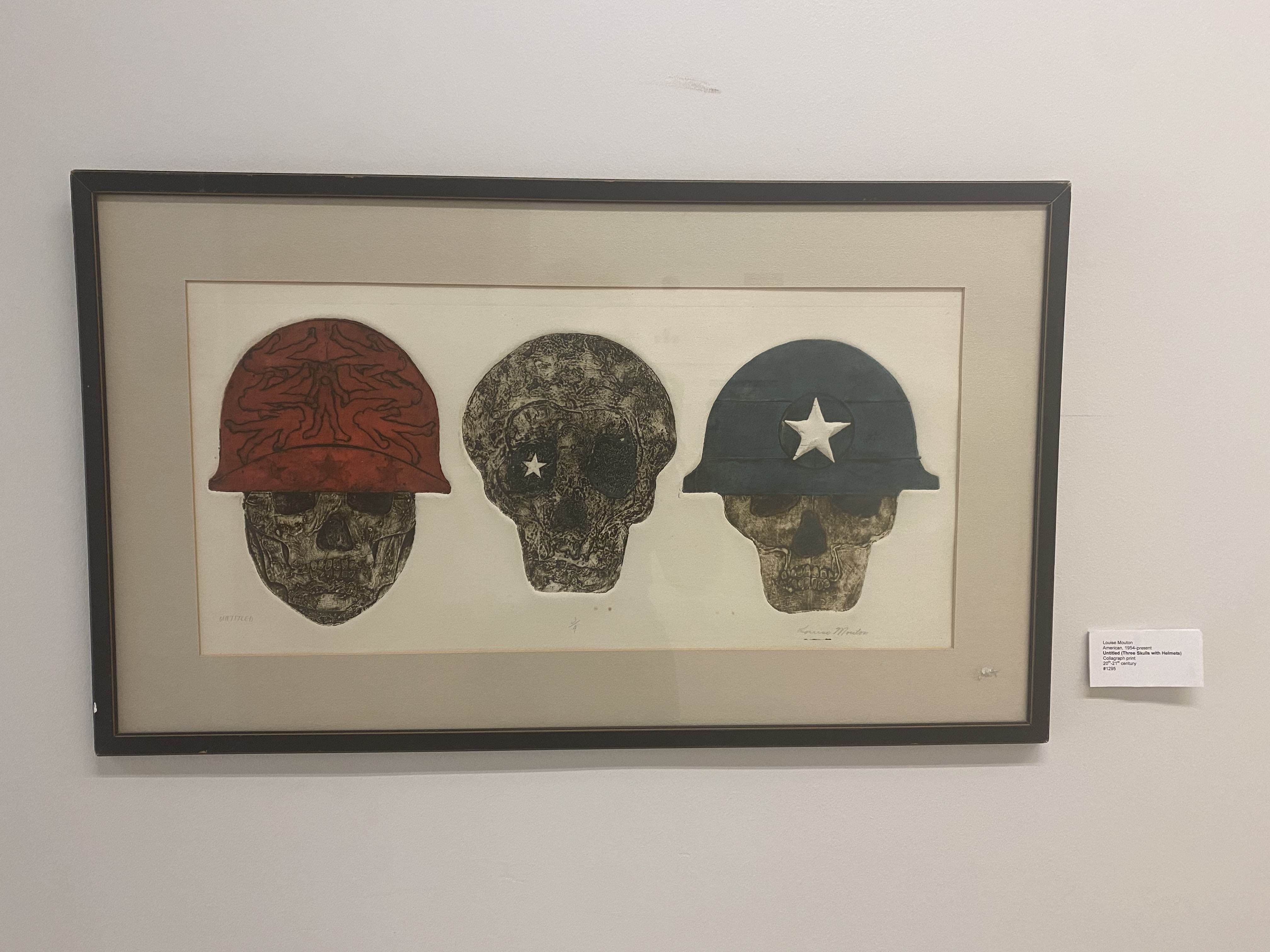
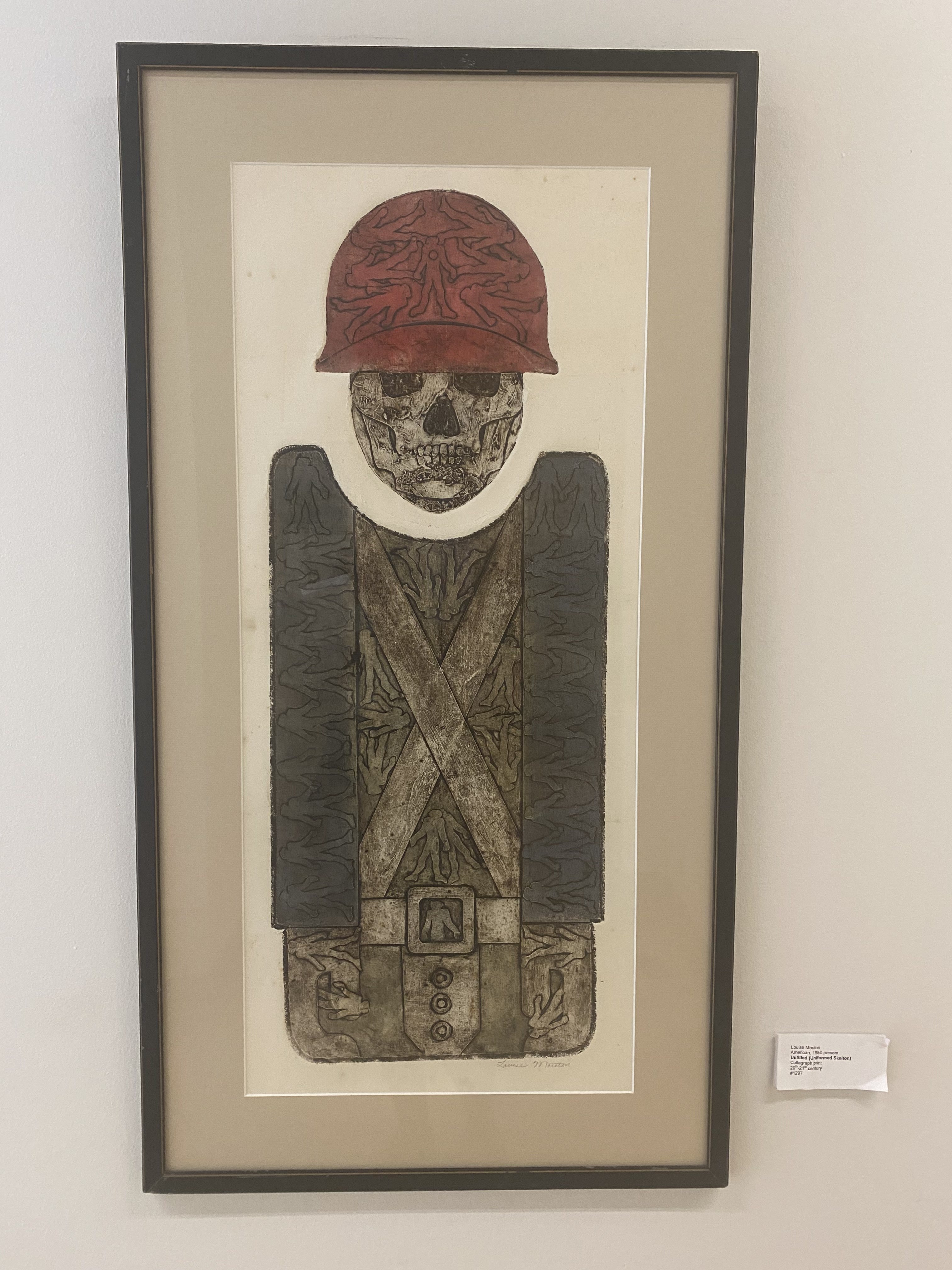
Louise Mouton Johnson is a New Orleans-born visual artist and longtime educator whose printmaking, quilt-inspired works, and mixed media compositions draw on African-American narratives, family history, and the cultural richness of her hometown.
Born and educated in New Orleans, she initially studied fine arts at Tulane University before transferring to Xavier University of Louisiana, graduating cum laude in 1976 with a Bachelor of Fine Arts degree. She then pursued a Master of Fine Arts at the Cranbrook Academy of Art in Michigan, completing that degree in 1980 with a specialization in printmaking.
Johnson’s career as an educator spanned over three decades in the New Orleans public school system, including fourteen years at the New Orleans Center for Creative Arts (NOCCA). She retired from teaching in 2016, yet continues a vigorous studio practice. Her artwork has found homes in public and private collections, including the City of New Orleans via commissions from the Arts Council, the Amistad Research Center, and the New Orleans Museum of Art, among others.
In her own words, Johnson frames her practice as rooted in narrative and memory: printmaking offers a means of visual storytelling, while quilt-making and stitched works contain symbolic forms that “represent concepts all humans relate to” — personal, cultural, and universal in meaning. Through layered media such as stitched paper, netting, lace, buttons, and fabric, her work evokes a rich interplay of materiality and meaning.
Johnson’s contributions to the artistic life of New Orleans—including her role as educator, printmaker, quilt-artist, and cultural narrator—position her as a vital presence for collections that explore regional identity, African-American heritage, and contemporary print/media practices.
Richard C. Thomas, Class of 1978
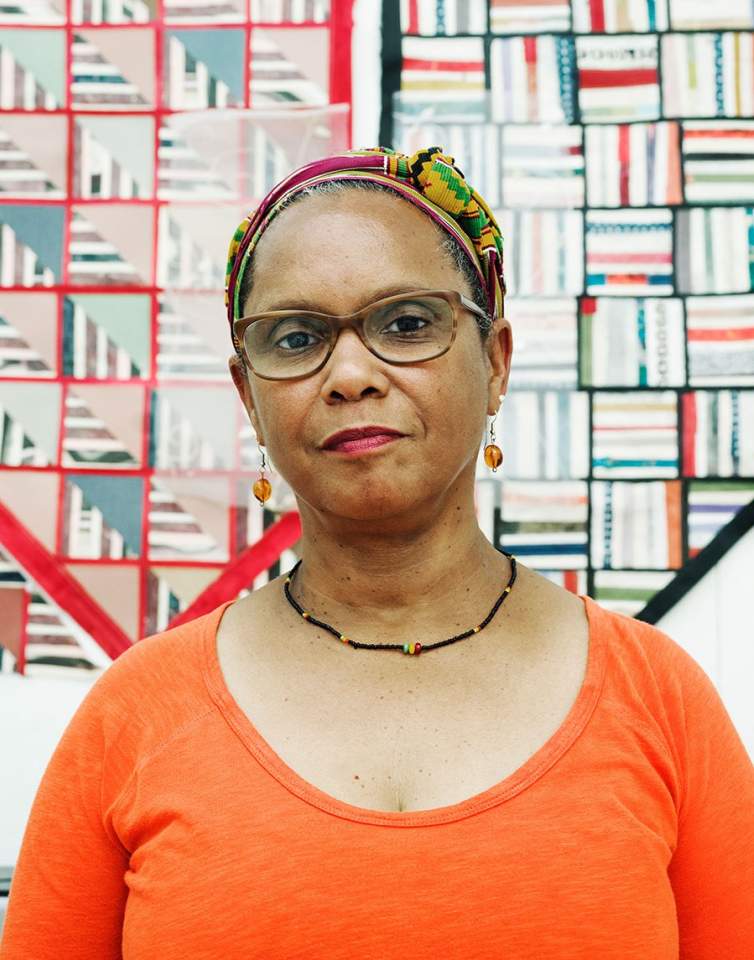
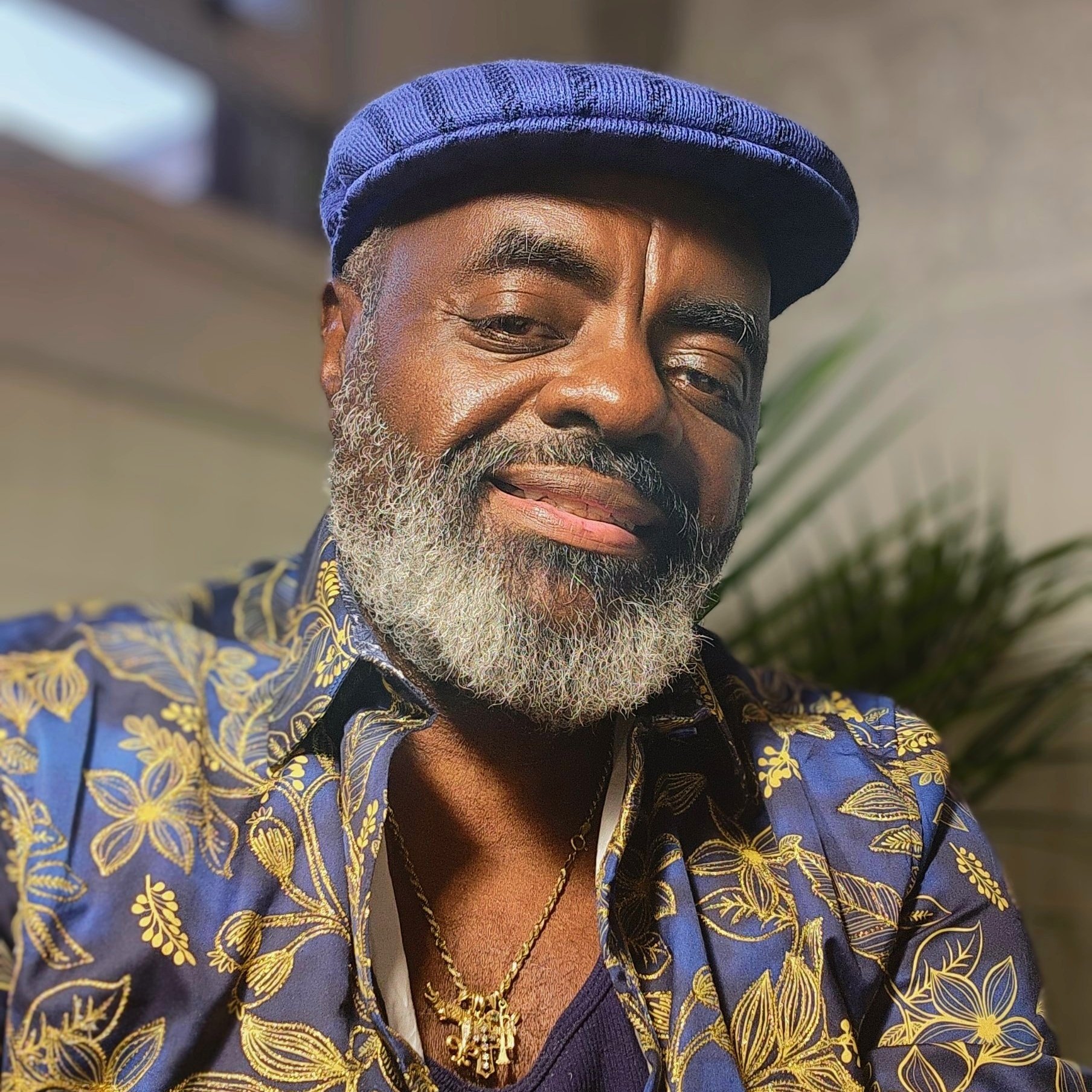
Richard C. Thomas (born 1953 in Bogalusa, Louisiana; moved to New Orleans at age two) is a distinguished New Orleans-based painter, muralist, arts educator and community advocate whose work and life embody the city’s cultural rhythms, social commitments, and Afrocentric visual language.
From an early age Thomas knew he would be an artist. According to institutional records, by age four he “knew he wanted to be an artist.” Growing up in New Orleans, he spent time walking to the French Quarter’s Jackson Square, associating with artists working there and soaking in the richness of the local creative environment.
His academic formation included studies at Xavier University of Louisiana, where he faced financial and academic challenges early on but achieved a 3.6 GPA with the support of key mentors—one of whom was John T. Scott, noted New Orleans artist and educator. During his time at Xavier, Thomas began to refine a distinctive visual idiom.
Thomas coined what he terms his “Visual Jazz” style: a fusion of Afrocentric imagery, bold color, rhythmic composition, and local cultural references—particularly the musical and social traditions of New Orleans. In his paintings and murals one sees Mardi Gras, jazz bands, second-line processions, neighborhood architecture and fluid forms that echo the improvisational spirit of musical jazz.
His public-works and advocacy have been extensive. The city of New Orleans commissioned him to create major murals (including underneath the Claiborne Avenue overpass and for the Louis Armstrong International Airport) as part of cultural revitalization efforts. Beyond his own studio practice, Thomas has long taught art in Orleans Parish public schools and founded the youth-oriented organization “Pieces of Power,” which mentors high-school aged students, provides field trips and gallery sight-seeing, and links young people to professional artists and institutions. He also curated efforts and advocated for increased representation of African-American artists in local museums and arts organizations, organizing networks and sharing lists of artists with institutions like the New Orleans Museum of Art and the Contemporary Art Center (New Orleans).
Thomas’s teachings and mentoring have influenced younger generations of New Orleans artists—among them Terrance Osborne—who credit his guidance in their formative years. Over decades he has exhibited numerous solo and group shows, created festival posters (notably for the New Orleans Jazz & Heritage Festival) and built a legacy that spans studio production, public art, education and community empowerment.
In recent years Thomas has faced challenges—his Visual Jazz Gallery suffered vandalism in 2025, raising concern among the New Orleans arts community. His commitment, however, remains steadfast; he continues to work, mentor and produce art rooted in his hometown’s vibrant culture.
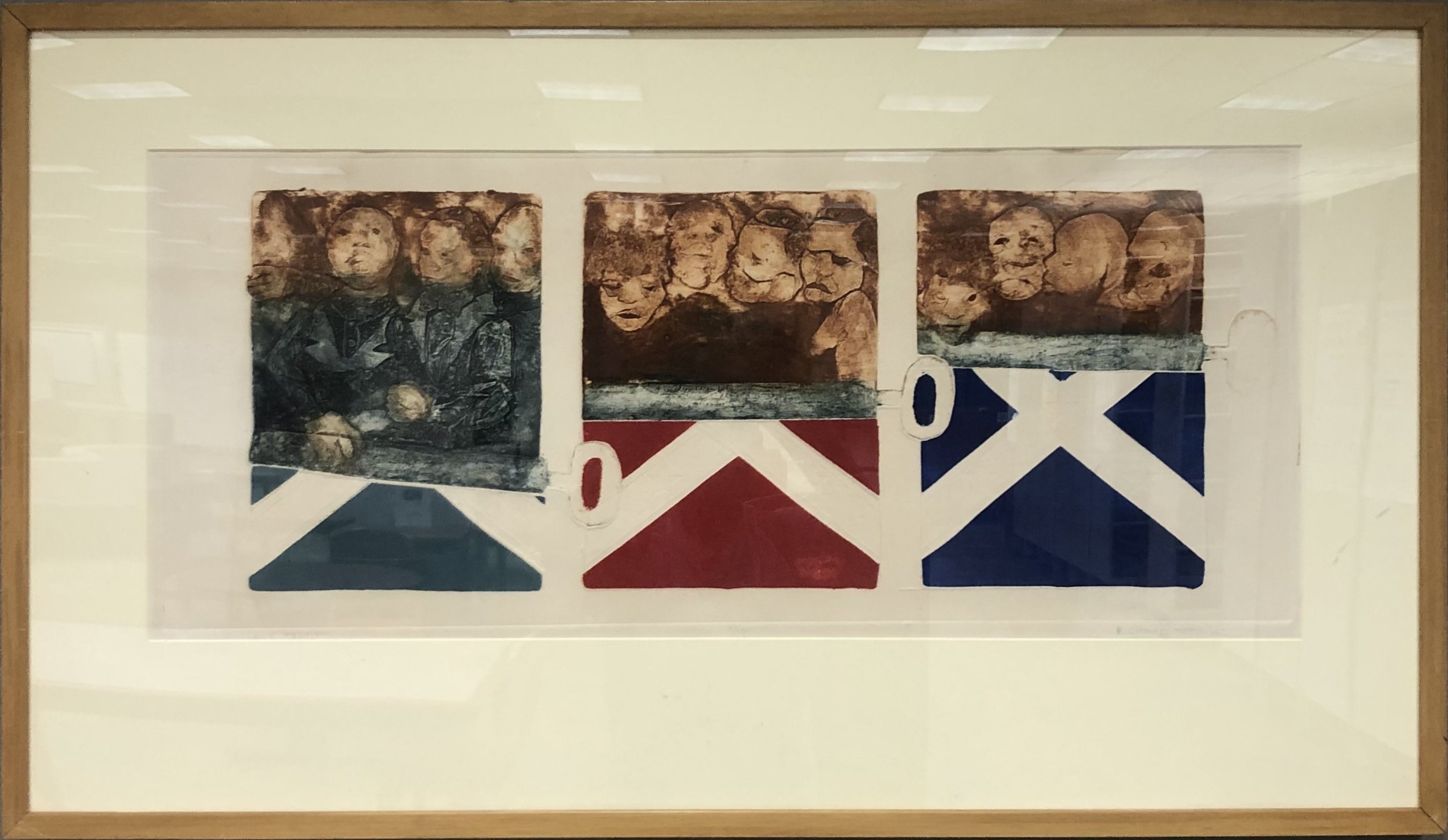
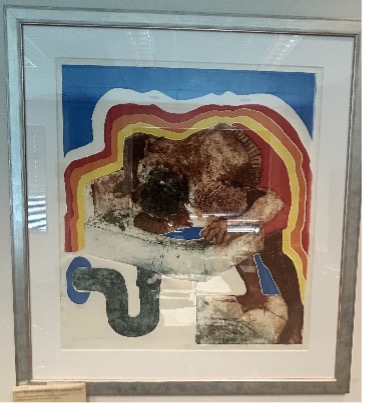
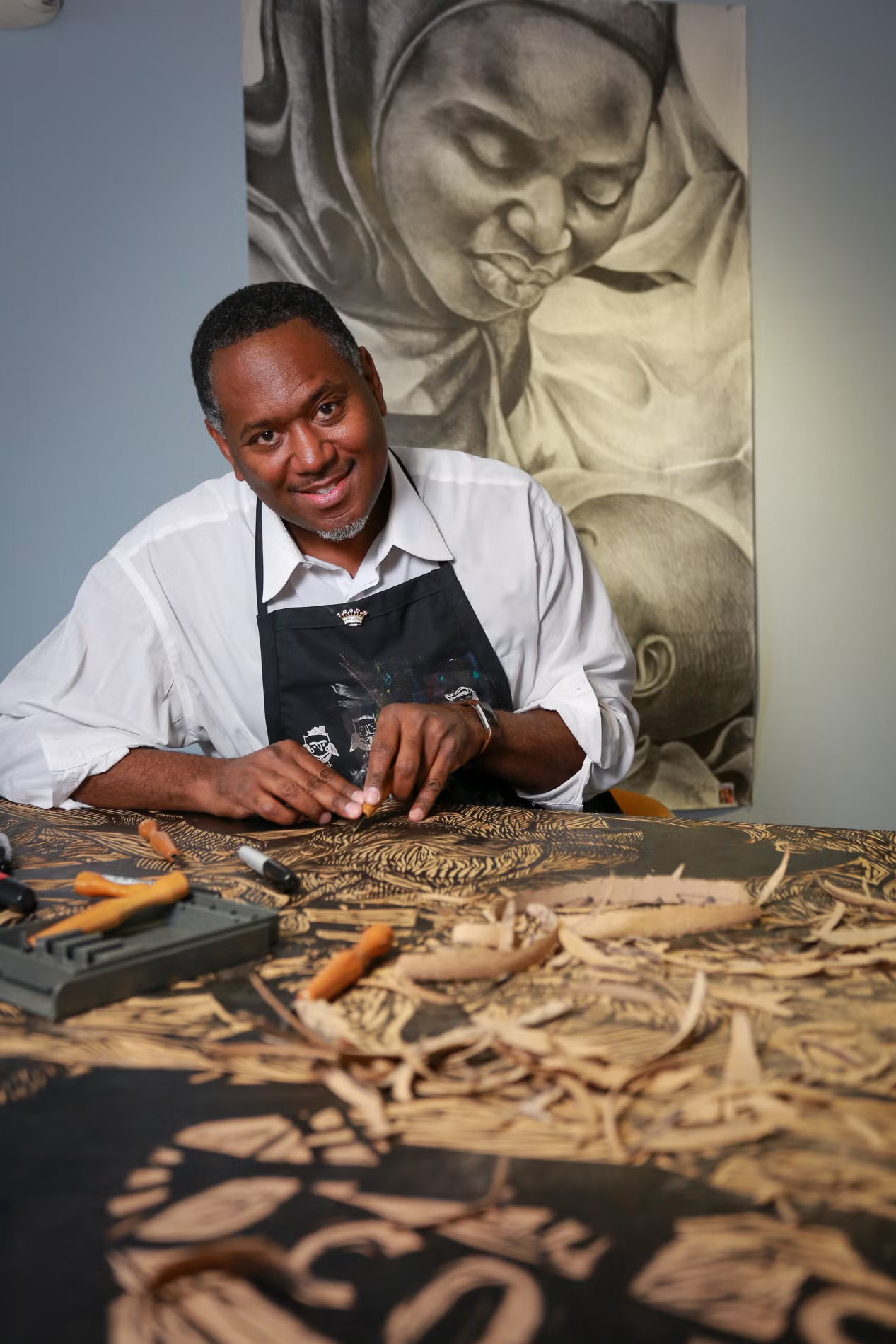
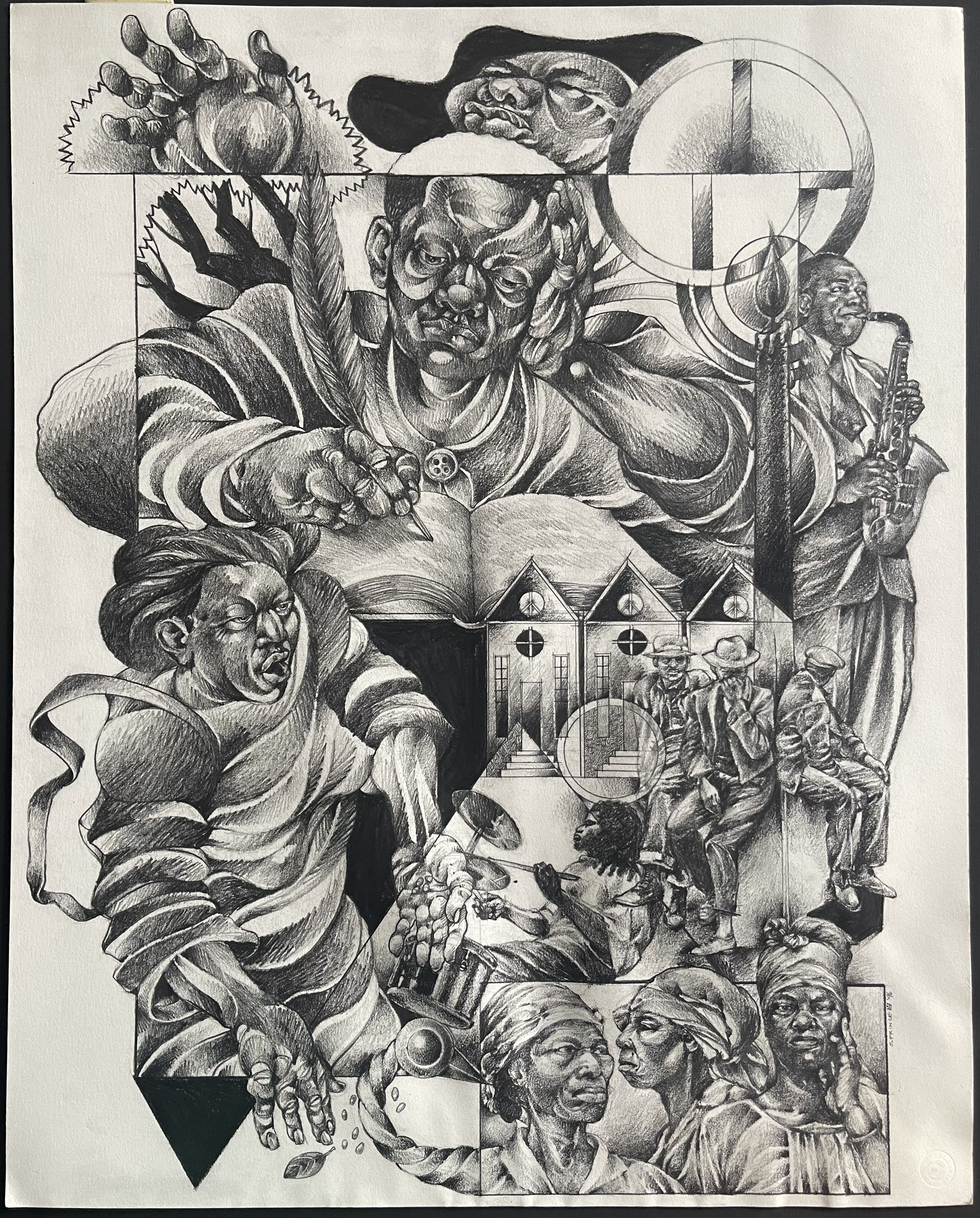
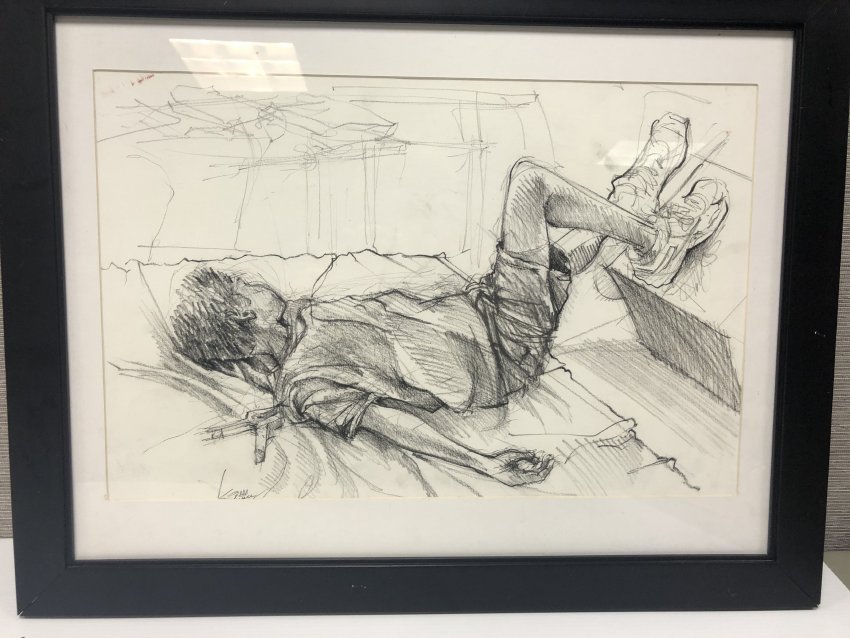
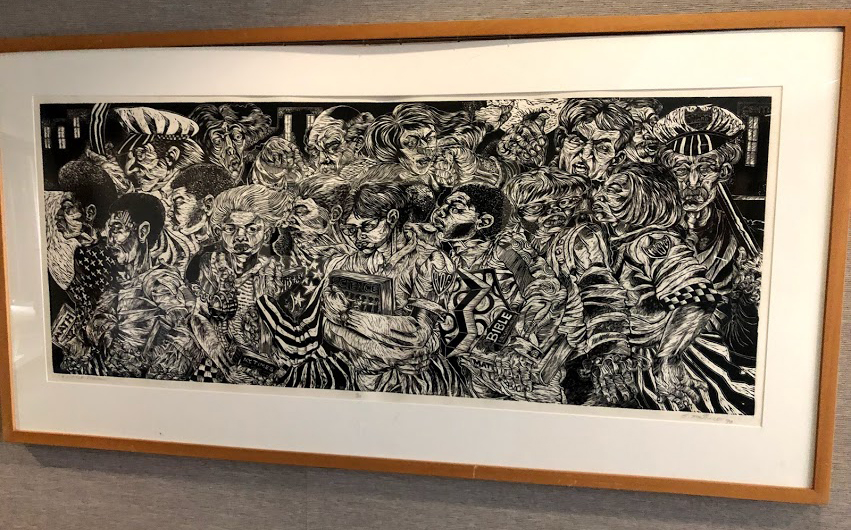
Steve A. Prince, Class of 1991
Steve A. Prince is an American mixed-media artist, printmaker, educator, and community-engaged creative, whose work emerges from his roots in New Orleans and extends into national dialogues around identity, memory, and healing.
Born and raised in New Orleans, Louisiana, Prince draws from the rich cultural, musical and religious traditions of the city.
He earned his Bachelor of Fine Arts degree from Xavier University of Louisiana in New Orleans. He then received his Master of Fine Arts in Printmaking and Sculpture from Michigan State University
Prince’s work traverses printmaking (especially linoleum-cut), drawing, sculpture, and large-scale community art projects.
His art is deeply narrative, metaphorical, and steeped in both the aesthetic languages of New Orleans—its jazz, funerary traditions, spiritual life—and broader themes of social justice, reconciliation, and collective memory.
One of his signature approaches is to bring people together—sometimes non-artists—in the creation process, fostering community and dialogue beyond the solo studio practice.
Prince has held roles as educator at multiple levels—from middle and high school through college—and led international workshops in diverse media.
In his capacity as Director of Engagement & Distinguished Artist in Residence at the Muscarelle Museum of Art, part of College of William & Mary in Williamsburg, Virginia, he engages with outreach, educational programming, and in-house artistic production.
His community-based projects include large collaborative works: for example, a 2019 project with over 500 participants focusing on the historic trauma of chattel slavery and its legacies.
Prince has been recognized for his contributions as an “art evangelist” — someone committed to bringing art into community life and making it accessible.
His work has been exhibited in galleries and centers, and he has served as artist-in-residence in international contexts (for example, Brazil) as well as domestically.
Steve A. Prince’s practice exemplifies how contemporary art can bridge studio work, print-technique tradition, and socially engaged practice. His background in New Orleans gifts his work with a rhythmic, spiritual and culturally embedded sensibility, while his teaching and community leadership broaden the scope of what it means to be an artist. For institutions like yours (e.g., the Xavier University of Louisiana Art Collection) his work offers a compelling intersection of African-American heritage, print and sculpture media, educational mission, and regional representation.
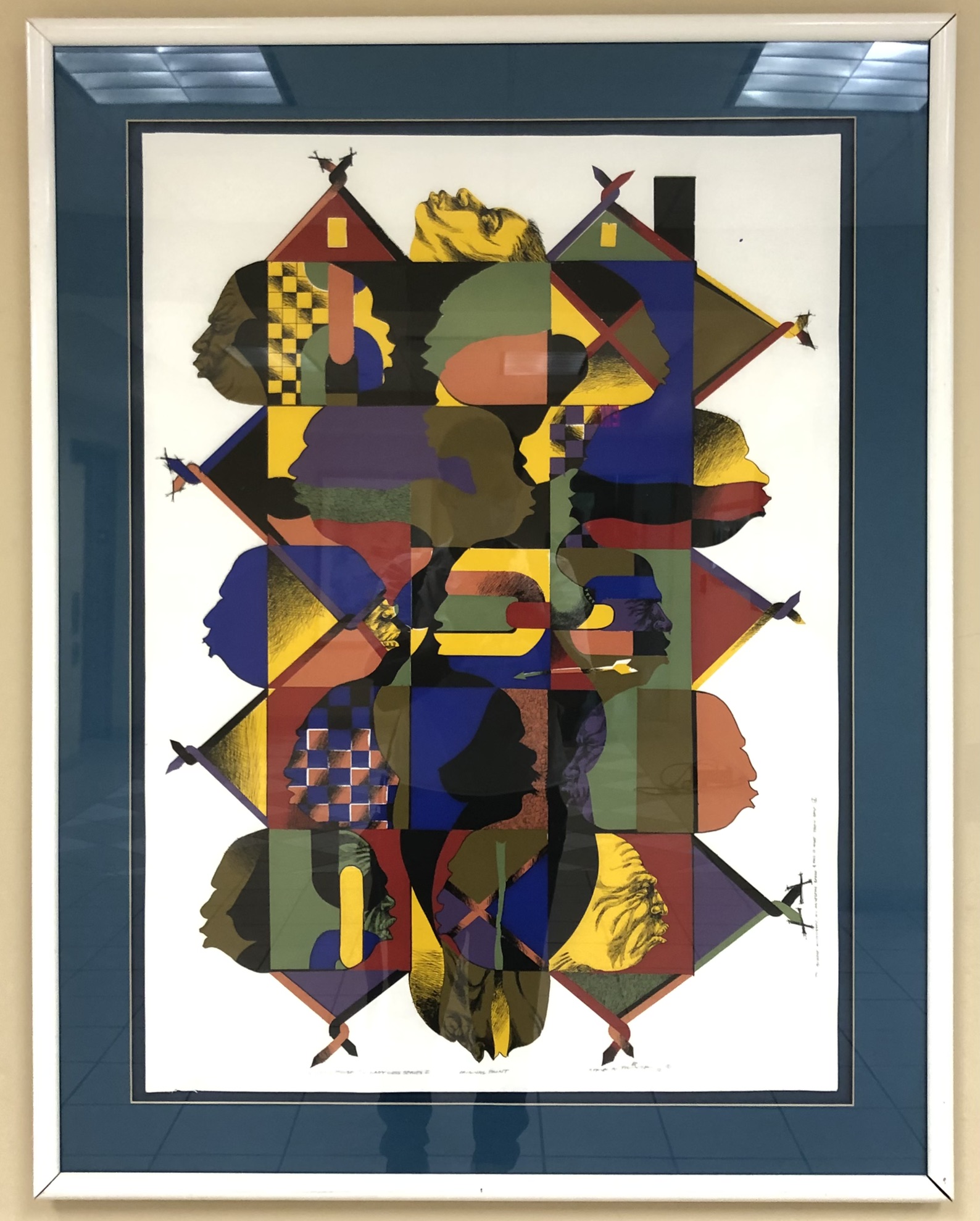
Terrance D. Osborne, Class of 2000
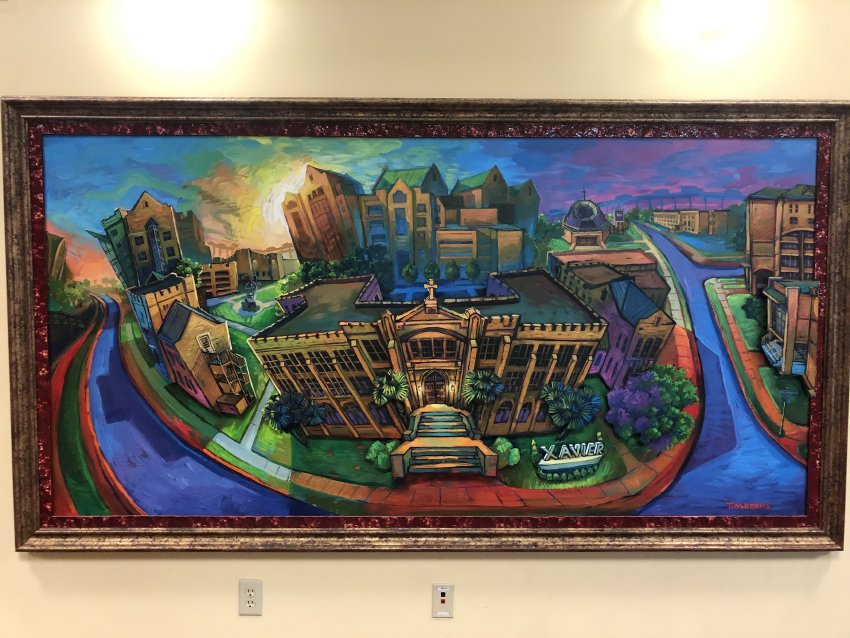
Terrance Osborne is a celebrated New Orleans painter known for his vibrant depictions of the city’s architecture, culture, and rhythm. Born and raised in the Tremé neighborhood, Osborne was surrounded from an early age by the color, sound, and energy that would later define his art. Encouraged by his creatively inclined family, he developed an early fascination with drawing and painting that blossomed into a lifelong pursuit.
As a student at the New Orleans Center for Creative Arts (NOCCA), Osborne studied under the influential artist Richard C. Thomas, who helped him refine his technical skills and instill a sense of pride in depicting the world around him. He went on to earn his Bachelor of Fine Arts degree from Xavier University of Louisiana, an experience that grounded his work in both academic rigor and cultural consciousness.
After graduation, Osborne taught art in the New Orleans public school system, notably at Alice Harte Elementary, where he encouraged children to embrace creativity and express their individuality through art. His career took a transformative turn following Hurricane Katrina in 2005, when displacement and reflection inspired him to dedicate himself fully to painting. Returning home, Osborne began creating a series of works that captured both the beauty and resilience of New Orleans—images of houses, second-lines, musicians, and familiar cityscapes rendered in luminous color and exaggerated perspective.
Osborne’s style is unmistakable: bold hues, rhythmic compositions, and whimsical distortions that breathe life into the city’s iconic neighborhoods. His paintings are deeply narrative, reflecting his belief that New Orleans is not merely a place but a living spirit—a mosaic of stories, movement, and sound. His art celebrates community and endurance, often depicting ordinary moments as extraordinary acts of joy and survival.
Throughout his career, Osborne has become one of New Orleans’ most recognized contemporary artists. His work has appeared on several official posters for the New Orleans Jazz & Heritage Festival, and his collaborations with brands such as Nike and Coca-Cola have carried the visual language of the city to national audiences. In 2017, he opened the Terrance Osborne Gallery on Magazine Street, creating a space that welcomes both locals and visitors to experience his vision of the city firsthand.
Osborne’s work embodies the pulse of New Orleans—its warmth, resilience, and unyielding creativity. Through his art, he continues to honor the people and traditions that shape the city, ensuring that its soul remains visible, vivid, and alive on every canvas.
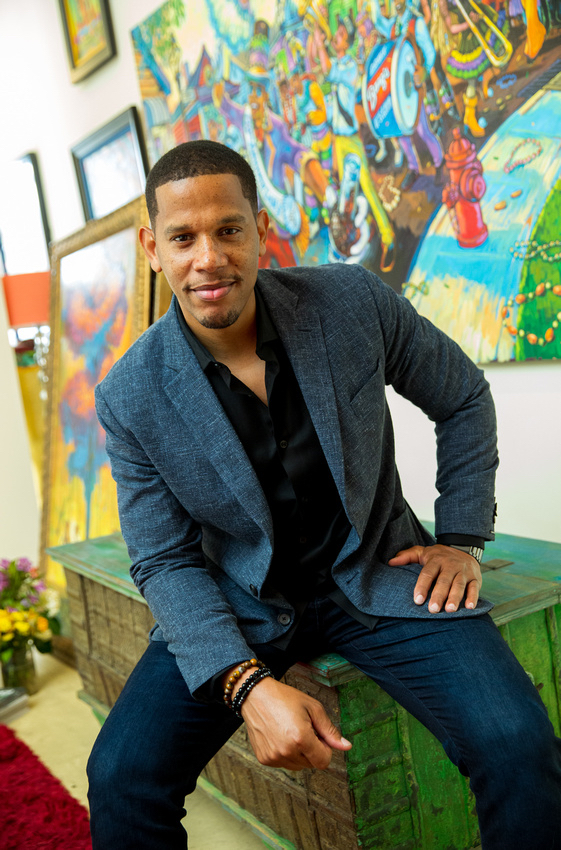
Ayo Y. Scott, Class of 2003
Ayo Scott is a New Orleans-based multimedia artist whose work reflects his deeply rooted connection to the city, its culture, and its shifting landscape. Born and raised in New Orleans, he attended Epiphany Elementary School, spent a year at St. Augustine High School, and graduated from Ben Franklin High School.
Scott’s entry into art was familial: by age seven he was casting bronze and making paper from blue jeans under the guidance of his father, John T. Scott (a MacArthur Fellow and longtime art professor), whose studio and household were rich with artists, musicians, and the making of art.
He earned his Bachelor of Arts from Xavier University of Louisiana in 2003 and began graduate studies at the Institute of Design in Chicago, though he paused his program after the 2004 tsunami inspired a series of paintings and the following year’s Hurricane Katrina compelled his return to New Orleans.
Through the aftermath of Katrina and the transformation of his city, Scott’s practice evolved into a mission of preservation and celebration. Where once he created art to “let things go,” he now creates to “hold onto” the people, places, and culture of New Orleans—especially those who defend the city’s spirit.
Working across paint, digital design, fabric, found objects, wood, and paper, Scott brings together layers of technique and memory. His subject matter includes large-scale murals in New Orleans, graphic design work, and mixed-media pieces that fuse local portraiture, abstraction, and cultural narrative.
Scott’s work has been exhibited in institutions including the Joan Mitchell Center where he was a resident in 2013-14.
In sum, Ayo Scott positions himself as an artist-citizen of New Orleans, channeling both his inherited legacy and the city’s ongoing story into visual form, making art that is at once personal and communal.

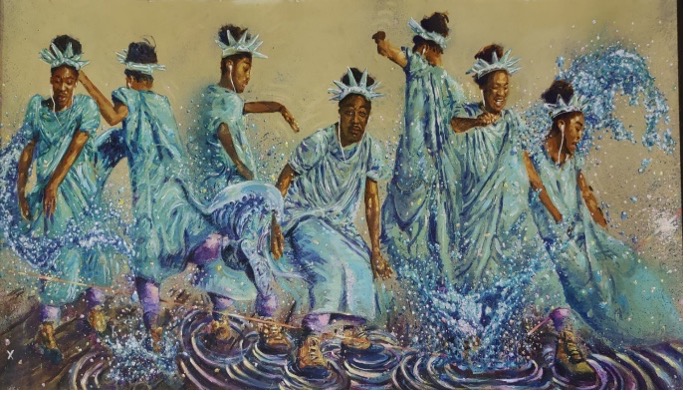
Augustus Jenkins Jr., Class of 2004
Augustus Jenkins Jr., born in New Orleans in 1980, is an American artist whose work draws deeply from his environment, his education at Xavier University of Louisiana, and a committed engagement with place and culture.
Raised in the culturally rich milieu of New Orleans, Jenkins pursued his Bachelor of Arts in Art at Xavier University of Louisiana, studying closely with the celebrated artist and mentor John T. Scott. His education at Xavier offered both formal training and immersion in the unique visual, musical, and spiritual traditions of the Gulf South.
Jenkins’s artistic practice reflects the dynamic interplay between figure, environment, and material. He embraces the legacy of New Orleans—its rhythms, vernacular architecture, community life—while also interrogating notions of identity, memory, and transformation. His work often fuses sculptural form and drawing, exploring how space and gesture can articulate cultural narratives rooted in his hometown.
Throughout his career, Jenkins has exhibited his work in regional and national contexts, contributing to scholarship and conversations around African-descended artists in the American South. By positioning his work within the continuum of Black art and the particularities of New Orleans, he speaks both locally and universally.
In sum, Augustus Jenkins Jr. stands as a significant contemporary voice: one who has emerged from a strong regional foundation, whose art—whether shaped by material, place, or story—invites reflection on culture, craft, and the enduring presence of community in the creative process.
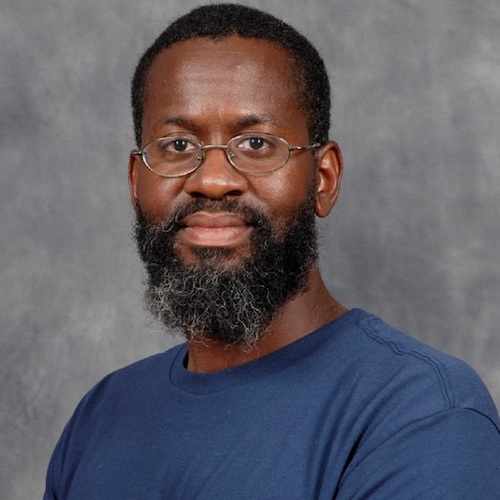
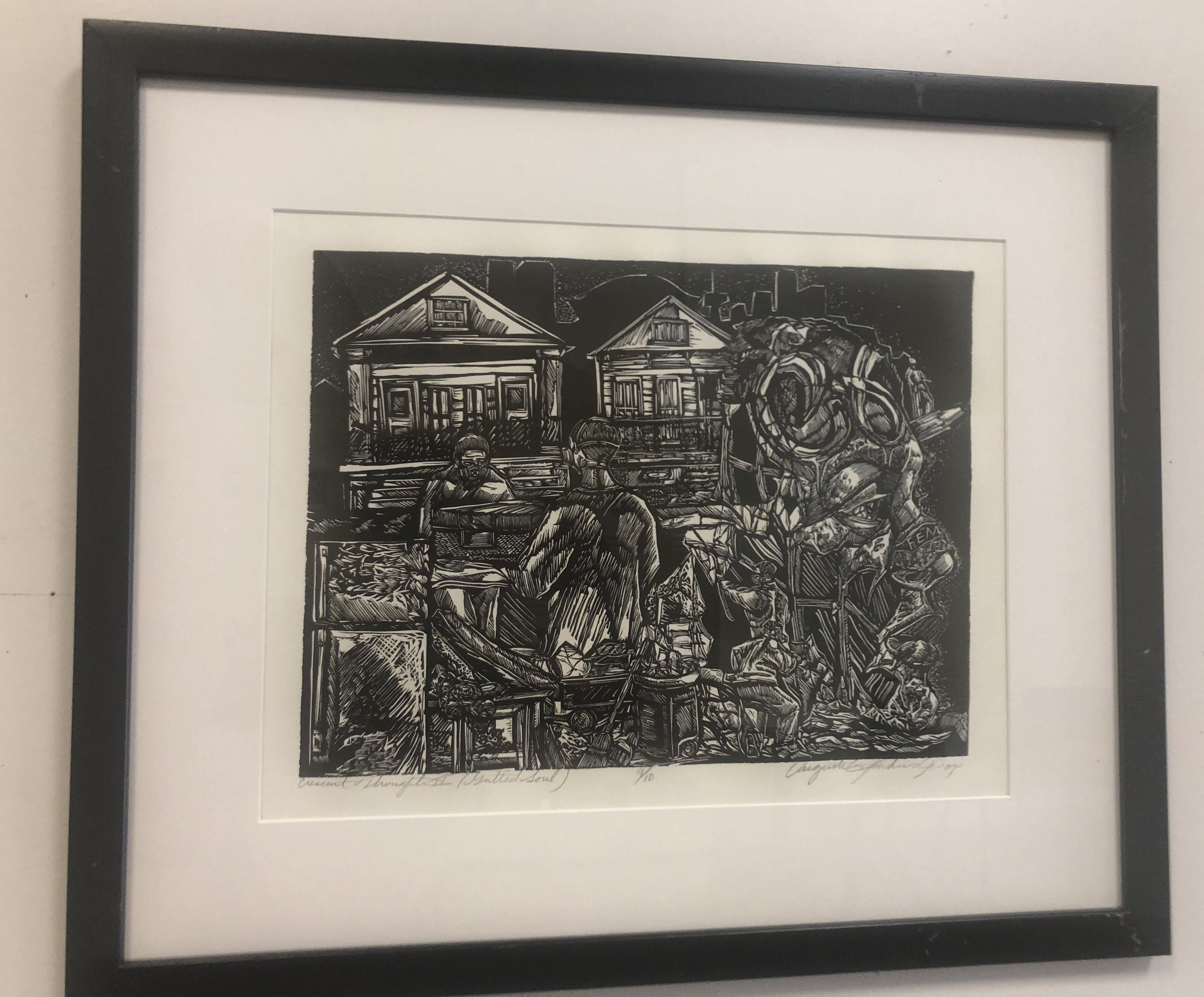
Alumni in the Art Collection
Class of 1930-59
Richmond Barthe (’34), Numa Rousseve (’36), William Pajaud Jr. (’46), Ernest T. Ross (’56), Frank Hayden (’57)
Class of 1961-89
Van B. Chambers (1961), John T. Scott (’62), Theodore J. Jones (’62), Joseph W. Sudduth (’63), Theodore W. Johnson (1968), Charles E. Graves (1970), Raymond Dobard (1970), Cheryl B. Creecy (1971), Diane Deruise (1971), Labertha McCormick (’71), Mary E. Davis (’71), Susan L. Peters (’71), George L. DeGrange (’72), Martin F. Payton (’73), Concepcion Tregre (’73), Vernon Dobard (’74), Bonnie J. Ibrahim (’76), Louise M. Johnson (’76), Cynthia A. Thompson-Bland (’77), Dawn S. Harris (’78), Yvette A. Gahie (’78), Edward Jackson (’79), Roy Sanders (’79), Kervin Robinson (’80), Mary C. Byrnes (’80), Randy C. Bellizan (’80), Antoinette Parker (’82)
Class of 1990-2020
Donald M. Richardson (’90), Steve A. Prince (’91), Kimberly D. Dummons (’95), Michelle N. Lavigne (’95), Rene’ J. Pierre (’99), Terrance D. Osborne (2000), Maurice V. Carter (’02), Ayo Y. Scott (’03), Augustus Jenkins (’04), Takako Uemura (’08), Cline E. Bailey (’11), Sophia Heng (’11), Andrea M. Hodge (’12), Nile C. Lang (’12), Brittney R. Rhea (’13), Erin M. Lieteau (’13), Jameel A. Paulin (’13), Von P. Osborne Reeves (’14), Aleshia M. Coleman (’19)


 Xavier University of LA Art Gallery